Noir vs. Crime: The Difference 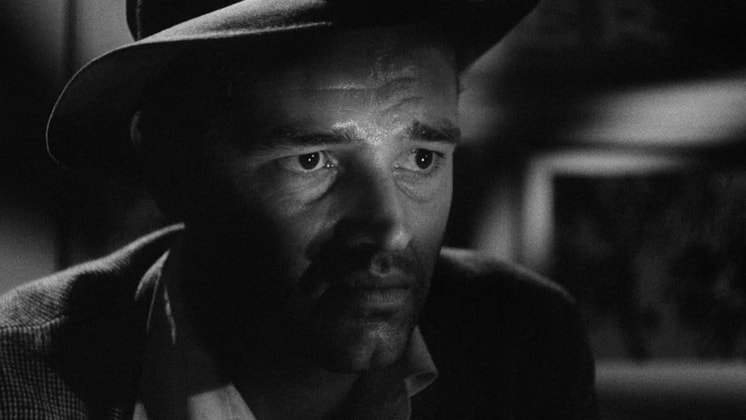 You can go down a rabbit hole trying to craft the perfect definition of noir, but you can start by saying it usually involves literal darkness. And it mostly takes place at night, in dingy poolhalls or roadside motels, or in mansions where the windows are stained glass and lead sashed, keeping prying eyes out. Even when it takes place in sunny LA, there’s usually an eerie chiaroscuro effect at work, the sun contrasting against the shadows of imperial palms and yellow stucco. Granted, it looks better in black and white, but Michael Mann and David Lynch made it look pretty damn good in color, too.
Cynicism and despair hang in the air in noir. Relations between men and women—always complicated under the best of circumstances—are further corrupted by mistrust and opportunism. Roger Ebert had his own succinct take on the subject, at the tail end of his review of the underrated Walter Hill neo-noir offering Johnny Handsome : “Someone who didn't write a dictionary once described [it] as a movie where an ordinary guy indulges the weak side of his character, and hell opens up beneath his feet.” The gambler who is in hot water gets out of it, but gets the itch again, and gets himself back into a hole, this one too deep to escape. The lush who kicks the habit has one more blackout bender and wakes up the next morning with a dead girl in bed beside him. Uncut Gems—the movie about the diamond merchant featuring Adam Sandler—definitely qualifies as neo-noir. For Sandler’s character actually does win enough to get out of hock, but has tried the patience of his shylocks so hard they still shoot him. Barfly, the movie about self-destructive alcoholics dwelling in LA’s grungier bars, certainly is dark in terms of atmosphere, practically bathed in seedy neon light and cigarette smoke. But the film’s protagonist finds a kind of weird, ineffable salvation in the self-destruction. And, of course, since drinking lets him meet a beautiful woman, booze also leads him directly to true love. Thus it ain’t quite noir. One of the best of the neo-noirs doesn’t involve drugs or gambling or any kind of vice or even weakness leading to a character’s undoing. If anything, it’s the character’s strength that lets the cops catch and kill him. I’m referring to Heat, with Al Pacino and Robert De Niro. Recall that near the end of the movie, after De Niro has almost gotten away with his crime, he veers on the highway, turns around. He could go to the airport and meet his girl and get the hell out of town with time to spare. But instead he wants to pay a visit to the man who betrayed his trust—a man who, by all rights and according to the code needs to be killed. That’s the brilliance of this example of neo-noir, that the ostensible strength of the crim—his virtue in the inverted world of the demimonde—is actually a weakness. Like a weird kind of Rob Roy, he revels sanctimoniously, stubbornly, in doing what he thinks is right, or at least what needs to be done. Vengeance is mine, sayeth the Lord, but He moves slow and in mysterious ways, which provides the temptation for the slighted man or abused woman to do it themselves. Fans of noir who know how Heat has to end still want to scream, Swallow your pride! Go to the woman, get out of town with the money! Be happy and free and sipping piña coladas on the beach for the rest of your life. But they also know that a happy ending would be a gross violation, its own sort of disappointing conclusion. This is the way things must end, with De Niro undone by his need to set his universe as he sees it to rights. This suggests a paradox at the heart of noir. If, as Ebert says, a weakness of character, some flaw within the person, proves their undoing, then there is no “must,” nothing foreordained in noir. For “must” implies fatalism, or the intercession of the gods prepared to either torture or at least test the lowly mortal in their sights. Jimmy Caan, for instance, gambles in The Gambler because he likes the high, not because Zeus or some God of Gambling has him selected for this fate. Noir is much more existential, a matter of choices born perhaps of people’s nature, or the flip of a coin, or the simple arrangement of genes. But the choices are also born of randomly decided actions, dumb moves, total accident and coincidence. You get the sense that God might be smiling at some of the suffering—ironically or cruelly—but there’s no deux ex machina. Some noir protagonists are so emotionally closed-off and unreflective that there’s barely a man in the machine. Crime films can involve an element of fatalism, but these offerings aren’t quite noir. Take, for instance, the masterpiece I Am a Fugitive from a Chain Gang, starring Paul Muni as James Allen, a vet recently returned from the Great War. In the beginning Jimmy seems happy to be home, and yet there’s a somber, restless cast to his dark, brooding eyes. He has a job all lined up for himself at the factory, but it’s no good. He can’t sit still at a desk. He must go a-wandering. Eventually he ends up at a men’s shelter, on the verge of starving, when another hobo pulls his coat about a soft touch who might give them a free burger. James is skeptical, but goes along, only to find himself sitting at the counter when his supposed friend pulls a gun on the fry cook at the diner. James tries to beg off, but the other bindlestiff forces him to shorten the register at gunpoint. Next thing you know, the cops grease the bum with the gun and send Jimmy up the river. Is this noir? What weakness brought Muni’s character to this low state? Literal enervation from hunger, sure, but hunger’s not a vice. It might have been treated as one in the Social Darwinist milieu of early twentieth-century America, but it ain’t like gambling or whoring or drinking. One could argue that if Muni had just stayed with his old factory job, content to slave it out as a factotum, none of this would have happened. But it wasn’t a cynical cast of mind that started him out on the road. It was a vague sense of wanderlust along with some undiagnosed shellshock. And since he was honorably discharged and even won the Croix de Guerre over there, you can’t even call him a picaro or a rake simply because he’s roaming. He’s the “forgotten man” the woman sings torch for in Gold Diggers after earlier singing her bubbly tune about “being in the money.” If anything Muni’s a bit of an idealist, a sort of clearer-eyed proto-beatnik. And that’s the difference between someone like Muni, and say, the guy on the bum in the later Poverty Row gem Detour. The man in Detour (who we’ll get to in a moment) must move, but for reasons entirely different than those that drive Muni. Another thing that needs to be point out is that Muni’s character is a product of the Great War, not the Second World War, which makes all the difference. Alright, you may say, but didn’t men emerge from that first great meatgrinder cynical and rudderless, cursing their luck and God? Yes and no. There was resentment that lingered long after the war, but there was also the sense that it may have indeed been the War to end all wars. Europe had been bled white, America had arrived on the scene as a great world power, the hunnish beast of Germany had been defanged and declawed. The first completely industrial war had been grisly, but maybe so grisly that humanity had learned its lesson, somehow found itself collectively chastened. And the calcifying hereditary regimes of previous centuries were giving way to less sclerotic, more parliamentary forms of participatory government. Every man a king! as Kingfish Huey Long liked to say, and mass literacy and the ubiquity of radio gave the world a strong, newfound sense of electrified interconnectedness. Science Fiction was still forward-looking (literally, as almost all time travel narratives of this period dealt with going forward, rather than backward in time.) Americans didn’t mourn the destruction of monarchies, as their “origin story” as the kids call it, involved throwing off a royal yoke on the day of their very inception. But World War Two was something else completely. And that it happened within the living memory of many who remembered the Great War must have weighed mightily on many a mind. Wasn’t the last one the ‘war to end all wars’? And rather than just contending with the nightmare of Taylorism and Fordism put to brutal usage, as in the Great War, men in the Second World War found something even worse: massive death camps whose smell (as J.D. Salinger said) one could never forget; the very Ur-Stoff of the universe being tampered with to produce giant explosions of heretofore-unimaginable scale and devastation (I am become death); not to mention the global body count of a supposedly inconceivable war handily outstripping that of the first World War. Noir has a bitterness to it, and a weariness to it. But it has those traits in common with the earlier crime stories in which men were framed rather than putting themselves in the frame through foolhardiness. What really sets noir apart is a kind of postwar fatigue that metastasized into a literal free-floating psychosis. Kirk Douglas in Out of the Past is not some garden-variety sadist. He is all the way out to lunch, keeping his smoldering bloodlust barely suppressed. Ditto for the guy in Detour (or the protagonist in Black Wings Has My Angel, or a dozen Jim Thompson books.) These are men who stared into the abyss, and when the abyss stared back, kept staring until the abyss blinked. It reminds me of something Charles Willeford talked about, and marveled at after the Second World War. All these men blowing off the heads of women peeking their eyes out of windows in Germany, cutting the gold fillings out of the mouth of dead men in Japan: they’re not going to go to jail when this is done. They’re going to sell used cars, and insurance. They’re going to be Rotarians and toastmasters and milkmen who tousle the hair of the local boy on their route. Think of it, a few million stone-cold psychopaths keeping it under wraps—sometimes just barely—by downing highballs in their offices and beating their wives in suburban bedrooms. Is that too cynical? If you listen to someone like Tom Brokaw washing the feet of a lot of old men gathered in a room with their chests filled with ribbons, maybe. But listen to the guys who were actually there, knee-deep in blood, like Willeford or James Jones, and you come away with an entirely different picture. This is not to say, however, that all of noir can be reduced to a collective expression of the psychic effects of the Second World War on American males. It can’t quite be reduced to any one causal factor, one theory (Jungian, Freudian, or otherwise), or even any one definition, as proven by this meandering post. Even when trying to define it tonight, I stumbled on a liminal case that doesn’t quite fit in either broad category I’ve created just for this blog entry. Take Detour again (I promised I’d double back.) For those who haven’t seen it, it’s a film about a man named Al bumming his way across the country. Most highway commuters ignore Al and his outstretched thumb, but finally a guy cuts him a break and slows down on the road’s shoulder to pick him up. This guy is a swell fellow named Haskell, who pays for Al’s meals on the road and isn’t chatty, preachy, or nosy. He even shares his smokes with Al. The only problem is that Haskell, who has some kind of heart condition, dies while behind the steering wheel. The protagonist—knowing no one will believe he didn’t kill the dude—is forced to take the man’s identity, his car, and his cash. He’s no thief, but he’s not enough of a sucker to think the cops will ever believe the truth, either. En route to California, Al makes the mistake of picking up a cute, fast-talking spitfire brunette. Only thing is, this broad knows this guy’s got a wallet, a car, and a name that don’t belong to him. It turns out that she hitched a ride with Haskell earlier, and knows this stinky, bedraggled wino ain’t him. She uses this info to extort and torment Al with a psychosexual needling so intense you’d swear they’d already been married a couple decades. Now, for those who still remember my words about Muni’s character James in Chain Gang, you may be crying foul, thinking: hey, this guy didn’t break any rules, indulge any vices. He just had a run of bad luck, like Andy in Shawshank or something. In fact, Al’s only mistake was the Samaritan’s one, to show charity by letting the brunette dame ride with him. No good deed goes unpunished is the kind of poor man’s proverbial subtext that appears in the more straightforward pulps, not the noirish ones. In noir, the Samaritan stopping to pick up the man would be seen from the perspective of the noir protagonist-hitchhiker, who maybe slept with the Samaritan’s wife. Except (and here I return to Ebert), there’s something I forgot to mention, something I didn’t even notice until I read Roger’s review of Detour: the movie is a frame narrative, a story within in a story in which poor Al relates his bad break to us. What’s the difference between a movie about a guy getting all the bad breaks and a movie about a guy telling you about the bad breaks he got? Ebert, one more time: “The jumps and inconsistencies of the narrative are nightmare psychology; Al's not telling a story, but scurrying through the raw materials, assembling an alibi. Consider the sequence where Al buries Haskell's body and takes his identity. Immediately after, Al checks into a motel, goes to sleep, and dreams of the very same events: It's a flashback side-by-side with the events it flashes back to, as if his dream mind is doing a quick rewrite.” The subjectivity involved in Detour’s use of voiceover (a device Chain Gang lacks) means we’re not hearing a story in Detour. We’re hearing a plaidoyer in the court of conscience (and the unconscious, since dreams are entered into evidence), and it’s all furnished by a man representing himself at trial. They say that only a fool has himself as an advocate, which might help explain why things don’t work out for Al. He gets picked up by the cops, and presumably he fries after that. Muni’s James Allen escapes from the chain gang, but ends up constantly on the lam, cursed with the peripatetic life like the wandering Jew. The one time he emerges from the darkness to visit his beloved, he does so skulking through the shadows, briefly, before disappearing back into the gloam once more. The real man upon whose story Chain Gang is based actually did get a full pardon, and won his freedom, but only after the film appeared in theaters. Crime pictures can have happy endings, or, in this case, can actually induce happy endings to occur in the real world just by presenting bleak depictions of gross injustice. What about noir, though? Is there some good, some life lesson to be extracted from it, that can make it edifying, a Bildungskrimi companion to the Bildungsroman? I don’t think so. I think good noir is more like a good war story, as described by James Jones. If you feel like you learned anything from it, or that it has any greater meaning, then that means the author lied.
0 Comments
Overdosing on Natural Causes: Some Reflections On Addiction, Life 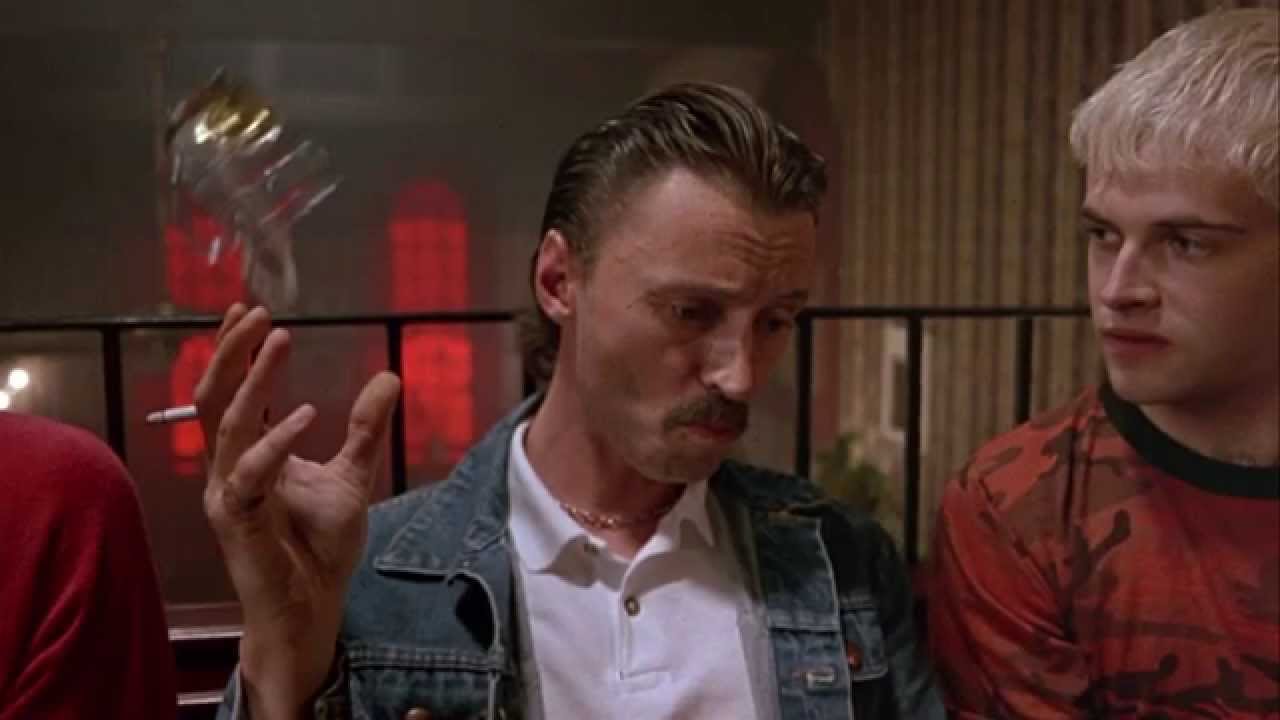 A lot of my friends and family members have been addicted to drugs. Mostly opiates, but not always. Some of them got clean, some of them died. As for me, I think I should have been an addict. Statistically I’m right in the sweet spot. I’m a downscale, lower-middle class white male, who served in the Army and has a raft of pain issues. In the war I was constantly around the CLS (Combat Life Saver) bag, which had all kinds of bennies in it, like fentanyl lollipops. I’ve had two surgeries to repair a war-related injury, both of which necessitated morphine before going in, and then Percocet during recovery.
Even as a civilian my doctor prescribed me Percocet for several years. And of course, like everyone else, when I took them I would feel my body perfused with a warm glow. Hot nettles would prickle the back of my neck as if it were being massaged by a lover’s hands. That hole that gapes from the stomach—that cold, unfillable gulch—was finally filled, for a time, at least. But then the magic glow waned, and after the high receded I felt even duller and colder than before. And the new synaptic connections in the brain laid down by the drug didn’t only now scream out for dope, but amplified the pain (physical and emotional) already there. And yet I didn’t try to recapture the glow when the dullness and the pains returned. When the new synaptic connections—created to kill pain but now hungering for dope— screamed out, I didn’t heed their call. Because I knew it would lead to the kind of hunger that I wouldn’t be able to dull with a whole bottle of pills. I knew it was a hunger that would widen the hole until it was a gaping, all-consuming chasm. I would probably end up stealing, abusing the trust of friends and family, rolling the dice every time I copped and every time I shot up. Why didn’t I end up an addict? Others took that first dive, and rather than flushing their pills down the toilet (as I eventually did) they graduated from pills to the needle. I can’t really attribute my success (or whatever) to willpower, or circumspection, or intelligence, or anything else that might allow me to pat myself on the back. Nor, exactly, can I just put it down to a matter of brain chemistry. That said, I’d guess some luck of the genetic draw explains why I’m still here and so many others are not. That where discernment gets lost in a chemical storm in one person’s frontal lobe, mine remained unclouded enough for me to fear the danger dormant within the dope. Joe Rogan talked about this a bit on his podcast, in his interview with self-destructive funnyman Artie Lange. Artie said that once he took that first hit of dope, something in his brain screamed out for more. Artie then asked Joe about his own limited experience with dope and Joe told him about his main brush with opiates involving an IV preparatory to some surgery. Rogan said that when the euphoria hit him, he shelled up, frightened of the narcotic’s joys as if they were the fists of an implacable opponent. “I guess it’s like being in the womb,” Rogan said, warm and safe, without pain or even full consciousness. Sounds good but if it’s ephemeral, transitory, every time you come down it’s going to mean that much more agony. A baby ripped from its mother’s body only has to endure the harsh surgical lights and the doctor’s slap on the ass but once. Do you want to feel that every day, every few hours? Someone who kicked a habit that could have downed a black rhino told me that giving up dope was like ending their greatest love affair. Eviscerating emotional agony (along with the more prosaic but admittedly unpleasant withdrawal pangs and nausea) washing over their body and waylaying them at unpredictable moments for months, years. Getting back to this blog entry’s main point, my lack of addiction bugs me. It induces a guilt in me similar to that of a man who survives a battle in which most or all of his comrades perished. I have enough friends and family dead now from dope that when I remember them, I can feel that ghostly twining of presence and absence called haunting. And though I know it’s Manichean foolishness, there’s a voice in the back of my head that’s been growing steadily louder with its constant, inalterable refrain. It’s gotten hard enough to ignore now that I have no choice but to address it in its own damn blog entry. And here, in essence, is what that voice is saying: “The world is divided between the hurters and the hurt. Those who cause people to use drugs, and those who use drugs to escape the pains imposed upon them by people in the former group.” It's nonsense, of course, but the thought won’t stop coming, spilling on repeat from the record player lodged in the center of my brain. I think of what John Frusciante, the guitarist of Red Hot Chili Peppers, said about dope in the depths of his addiction. “It’s my way of staying in touch with something beautiful.” That’s just a junky rationalizing his habit, maybe. But still, there’s the sense that for the addict life is not enough, that one most go outside of life, to a transcendence hidden in some substance. At least, this lack that drives the need is felt by those sensitive enough to yearn for some return to childhood’s innocence, or the womb’s warm oblivion. Those who don’t yield to the dope—the punctilious, discriminating, fastidious—are the martinets, the early risers, the postmen, vice cops and meter maids. We don’t need drugs because we stopped feeling so long ago that we can no longer remember Eden’s lost charms. Life is not only enough for us, with its tedious rhythms and drudgery. We relish its unoriginality, its lack of color, its rules and constraints and our little semiautonomous fiefdoms within the larger prison whose walls we’re too unoriginal to see. Ours is the strength of the pusher who gets his high from counting his capsules filled with dope in the morning and his bundle of cash in the evening. William Burroughs, as brilliant as he was, may have been wrong when he said junk wins by default, that for those with no strong attachments, it fulfills a need. If it were just about filling a void present from the beginning (rather than filling a void growing where once warmth dwelled), he might have been right. But there are plenty of people who became addicts who achieved the sublime via their art prior to using dope, and only started using stop literal pain. The musicians Charlie Parker and Kurt Cobain both found their way to dope as a way to alleviate undiagnosable stomach ailments, before getting waylaid by its spiritually analgesic effects. Did you ever see Trainspotting, that movie about the Scottish heroin addicts who spend their days snatching purses and slamming dope in their veins in decrepit council estates? There’s a scene near the beginning where they’re all in a bar. Most of the group is dope fiends, except Tommy, who’s a football fanatic (and eventually succumbs to the needle), and Begbie, who steadfastly refuses to do heroin. I can’t even remember why Begbie remains with this lot, as addicts are tedious to the sober, especially to those who are ornery and “up” by natural disposition. Maybe it has something to do with this group all growing up together. Maybe the Scots are like Italians in that they don’t outgrow their childhood friends and family members even when they’re a pack of ne’er do wells and terminal fuckups. Anyway, they’re in the bar, on the second floor, at a table at the edge of a balcony overlooking the tavern’s main room. Begbie, after drinking the dregs from his pint, tosses the empty glass over the side railing. There’s a crash and a clatter and a scream, and it turns out that Begbie’s stein has cracked some girl on her skull. Begbie and crew go downstairs to see the damage wreaked by his careless tossing of the empty piss pint from the railing. Blood is pouring down the young lady’s face, and her date is understandably seeking vengeance. But Begbie, undaunted, lets go with a savage roar, enraged that someone would attempt to hold him to the petty laws of civilization and decency. He has mad Rasputin eyes and the energy of a bantam gamecock equipped with cockspurs and ready for the pit. His is the energy of a man with Napoleon complex who’s learned how to assuage his insecurity over his smallness with violence. Preferably by beating the shit out of men much bigger and more musclebound than him. As Begbie prepares to mete out punishment (or maybe a few seconds before) the frame freezes, Scorsese style, and the narrator speaks over the frame (also Scorsese style): “Begbie didn’t do drugs. He did people.” And that’s it in a nutshell, the problem with which I’m grappling at 3:45 am on a Wednesday, getting ready for an early appointment with my doctor. Ridiculous, I know, as there are no doubt plenty of wonderful people out there who do neither drugs nor people. And there are just as many, no doubt, who do drugs and people. But it bothers me on nights like this one, when I think of my friends dead, and me alive. And I think of those who must fly from life toward dope’s transient and ultimately illusory mercies. The writer Harry Crews once said words to the effect of “Find what you love and let it kill you.” I guess, ultimately, I don’t love anything enough to let it kill me, except life itself. And even though life’s a drug with diminishing returns, I’m addicted to it, and need it now just to feel normal. Maybe death is the ultimate high, but I only plan on finding that out in my own time. I’ve got it all planned out: I’m going to overdose on natural causes. 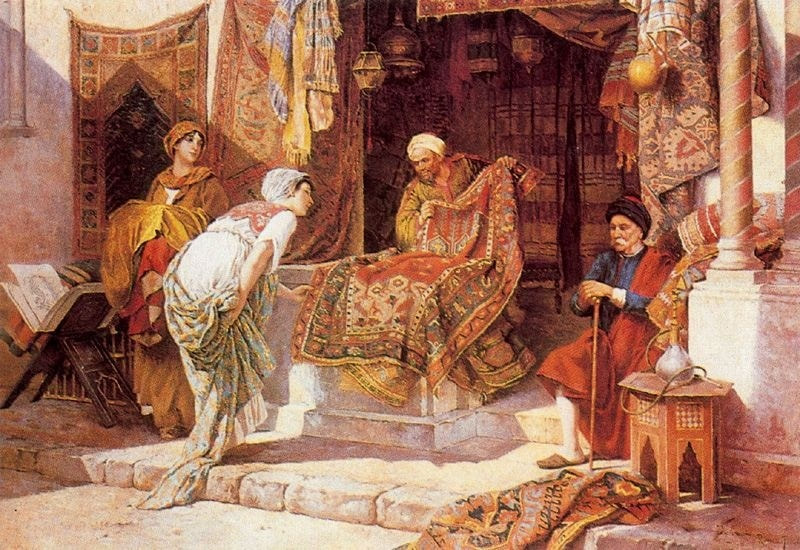 DON’T YOU WANT IT TO BE PERFECT? NO, I DON’T.There’s a story Nicole Kidman tells about her experience working with legendary director Stanley Kubrick on Eyes Wide Shut. They were between takes and she mentioned the criticism commonly lobbed at Kubrick, that he was a perfectionist. The subtext seemed to be that he was monomaniacal, obsessed to the point it hurt the work.
His response to her perfectly encapsulated his position on the critique. “Don’t you want it to be perfect, Nicole?” It’s a good answer, and certainly one should strive to do their best at all times. And yet the question might not be quite as rhetorical as Kubrick probably thought. There are, in fact, times, where perfect is not what’s called for, some instances where rough edges improve rather than harm. Examples of this are far more numerous in music than in film. Think of all the various subgenres that highlight the fuzziness of strangely-tuned guitars, deliberately sought-feedback, even noise for its own sake. Art rock, lo-fi, garage rock, and punk all have strands that repudiate the perfect as inauthentic, sterile, soul-draining. When Nirvana recorded their second studio album, Nevermind, they made the jump from respected regional indie SubPop to industry juggernaut Geffen, and naturally their production got the requisite makeover. A new producer was brought in, and his work was double-checked by another producer, who changed and tweaked the mixing levels with one of those space age soundboards. The result was a massive, international hit so influential it divided modern rock along one of those B.C. / A.D. cleavages. And yet the band’s ultimate feeling about the album—especially Kurt’s—was that it was like an artifact encased in Lucite. It couldn’t really be touched, or enjoyed. Its perfection alienated the ear rather than reaching out to it. They would correct this mistake (if indeed such a great album can be called a mistake) with In Utero. For that album they would bring in Steve Albini, whose style was so antithetical to that of his predecessor that he even eschewed the label “producer.” He saw himself as a recordist, and made it clear beforehand that Nirvana wasn’t even one of his favorite bands. Albini proved much more hands-on, literally, his approach involving positioning mics over each instrument at a particular distance and angle to achieve that imperfect-perfection. And the difference shows. Whether you like Nevermind or In Utero more (or if indeed, you like either) would probably reveal as much about your taste in songcraft as anything else. But the sound difference is there, and evidence of two different aesthetic philosophies. But if it’s easier to understand the appeal of imperfection in music, does it still remain possible to see the principle at work in film? Sure. Take Abel Ferrara’s Bad Lieutenant, the relatively low-budget movie about a drug-addicted cop having a crisis of conscience and a nervous breakdown after dealing with the rape of a nun. Plenty of scenes were shot guerilla-style, with Ferrara sneaking into clubs so closely on Harvey Keitel’s heels that he bumps plenty of unwitting extras, who look at the camera. Even the scenes that were shot with permits or in the interiors of friends’ apartments were many times underlit, but the graininess wasn’t distracting. It was (much like the deliberate lens flares employed by Kubrick) part of a larger aesthetic choice. Critic Roger Ebert noticed as much in his review of the film: “This film lacks the polish of a more sophisticated director [than Ferrara], but would have suffered from it. The film and the character live close to the streets.” The shaky camerawork, the blending of pros with nonprofessionals, even the dialogue sometimes not picked up clearly by mics makes it better than it otherwise would be. The writer Charles Bukowski, near the end of his life, complained that every time he tried to pick up a new novel it would just fall from his hands. “The slick polish grates. The lies jump out.” There’s that same word Ebert used, “polish.” Kubrick definitely didn’t lie, but he did polish, tune and tweak. His longtime collaborator—Jan Harlan, relation of both Kubrick’s wife Christiane and the Nazi filmmaker Veit—said that Kubrick was still editing Eyes when he died. Would he have improved it? And if so, would the improvements have made the film better, or (paradoxically) worse? It isn’t as if perfection didn’t serve Kubrick well at times. The sublimity of 2001 works because the movie is in some way about the fearful yet ungraspable symmetry of our universe. It’s a movie that even a race of aliens far superior to us could probably admire. Hell, even the creator of the universe would probably find it fascinating, although he/she/it might dispute a few details, like a celebrity reading an unauthorized biography of themself. The perfection approach works equally well for Barry Lyndon and Dr. Strangelove and Clockwork Orange. For these movies are in some ways god’s eye views of human follies: of our self-destructive urges (Strangelove); of our petty obsession with caste and decorum, status and ritual (Barry Lyndon); of the medical-scientific desire to solve the conundrum of human aggression, the destructive demiurge that can’t quite be separated from the creative (Clockwork Orange). This approach doesn’t quite work for me when it comes to The Shining and Full Metal Jacket. I fully understand that both are influential masterpieces. But I can’t watch them again and again like those previously mentioned films. Full Metal Jacket, for me, is far inferior to Platoon, despite Kubrick being a much better filmmaker than Oliver Stone. But that static quality to Full Metal Jacket— its frozen self-awareness, the white cloudless sky of what is obviously not Southeast Asia—sinks the film. Kubrick, like Terrence Mallick, ignores the prosaic miseries of men in war. He has them quote Nietzsche rather than complaining about how uncomfortable their dirty underwear feels after weeks without washing. Full Metal Jacket is the Nevermind of war movies. It’s packed away in a Lucite box, a museum piece you can stare at but not touch. In Platoon you can smell Vietnam, the acrid insect repellent, the antimalarials dropped into fuggy canteen water, the mildew soaked into army surplus canvas. It is an imperfect movie in which, excepting the finale, there are no battles that can be understood as setpiece encounters. That’s another thing Ebert got right when talking about Platoon, that the battlespace is a confusing, unsatisfying three-hundred and sixty-degree arena. Yes, Oliver Stone tried to graft his own philosophic pretensions onto the film, but his personal experience of the war made it impossible for his didactic streak to prevail. What about The Shining? Author Stephen King’s words are worth paraphrasing here. He said that the movie was like a beautiful Cadillac without an engine. It was gorgeous but didn’t really go anywhere. And contra the novel, in which the Overlook Hotel burned, in the film version everything around the hotel froze, including the mad writer Jack Torrance. King ultimately accused Kubrick of having a materialist overintellectual mindset that would not let him countenance the idea of the supernatural. The only monster in Kubrick’s The Shining was a man going insane. It was the work of someone who thought too much and didn’t feel enough, was how King put it, I think. King’s detractors fired back that he was a man who felt too much and didn’t think enough. But if that were true, none of the titanic minds of the movie world (like David Cronenberg or Kubrick himself) would have been drawn to his material as they so obviously were. King said his main tact as a writer was to create sympathy for his characters and then put them in harm’s way. Bearing that in mind, you can see why he didn’t dig Kubrick’s picture. Shelly Duvall pants and emotes and looks pale but her fear alienates and even repels more than it draws the viewer in, in sympathy; the boy who plays Danny is only slightly less creepy than the two axe-murdered twins who urge him to come play with them. And Jack Nicholson is...well, Jack Nicholson. He glowers and arches those satanic eyebrows the same batshit gusto as Gomer Pyle and Droog Alex in their respective films glowering from that trademark Kubrickian angle. Believe it or not, there’s actually a religious corollary to what we’ve been talking about here. I learned it from a housepainter who was a bit of a wiseacre. His fellow housepainter had noticed that he’d applied a little too much gloss to some shiplap siding on a house. The smartass turned from his ladder and said, “You know, Muslim rug weavers deliberately loom one flaw into every carpet, because they believe perfection is an insult to god. For only Allah is perfect.” Maybe that’s the secret. Perfection works when and where the Zola-esque/Flaubert-esque “god’s eye” omniscience is warranted. Vietnam needs a worm’s eye view, though, preferably a worm rooting around in the blood-soaked, shrapnel-spalled loam. The Shining needed someone to stand beside Danny and Wendy when Jack starts to wield his axe. But it feels like Kubrick—who probably would have denied a sadistic streak—is somehow allied with the axe-murderer. Nicholson’s a brilliant actor, especially when playing against type, in understated, quiet roles (like About Schmidt). But his intentionally over-the-top blowing-a-gasket-Tony Montana-style performance is essentially wasted here. We don’t care (or at least I didn’t) about him or his victims. He might as well be wearing a hockey mask and obscuring that movie star mug. And you could have swapped Danny and Wendy out with a couple big-bosomed coeds, who were dared to spend a night (rather than a whole season) at the Overlook. It would have shortened the runtime and provided more t & a besides just the decomposing woman in Room 237.  Removing the Barb of Irony from the Heart “Since my earliest childhood a barb of sorrow has lodged in my heart. As long as it stays I am ironic — if it is pulled out I shall die.”
That’s a quote from Soren Kierkegaard, one I think about from time to time, especially as it relates to artists. How serious should an artist be? How serious can they afford to be? Is irony always a smokescreen to conceal real emotion, or is it sometimes employed, as an aftereffect, to take the edge off real emotion? If one’s not careful, hard-won emotion evoked in the audience can quickly deteriorate to sentimentality, melodrama. I was watching some Simpsons DVD commentary a little while back (yes, to quote Bukowski, some lives are meant to be wasted.) On the commentary track a writer said that the staff always made it a point to follow every strong emotional moment in the show with something that undercut it. Watch enough of The Simpsons, especially those seasons in the halcyon days between the third and eighth year, and you’ll see this technique constantly employed. It’s so obvious on second and third viewings that you wonder how you missed it the first time. But then, that’s how magic works. Remember Lisa on Ice, when Bart and Lisa are pitted against each other in the hockey rink, on rival teams? Bart is a goalie while Lisa is discovering a heretofore-untapped kind of bloodlust coursing through her veins, turning her into a reckless enforcer with a wicked slapshot. The episode comes to a climax with Lisa’s team facing Bart’s, and Homer egging on both, stoking their unhealthy competition until it becomes toxic. Finally, with the score tied, Lisa is given a penalty shot against Bart. Homer is baying for blood from the stands along with all the other fans, while Marge is doing her trademark disconcerted groan and clutching Maggie to her breasts. Bart and Lisa, rather than breaking the tie, flash back to fond memories of their early childhood together, eating ice cream, playing pranks on Homer. Then they throw down their sticks and go to embrace each other in the center of the ring. It’s a sweet moment. But then it’s followed by a massive brawl in the stands. As usual when Springfield devolves into a mob, Hans Moleman gets the worst of it while the ornery types like Snake and Willie thrive in the melee. Does this final scene work? Sure, though not quite as well as the one where Rod and Bart are playing miniature golf and Bart coaxes Rod into calling it a draw. That episode ends with Homer and Flanders in their wives’ Sunday dresses, mowing their lawns while the entire neighborhood looks on, laughing and pointing. Still, there’s a principle at work here, first spotted by that writer on the commentary track, that I’ve been mulling over for some time. It makes me think of David Lynch, and the film critic Roger Ebert’s relationship to the surrealist auteur’s work. Don’t ask me how I hopped from The Simpsons to David Lynch. That’s just how my mind works, in wild improvisational leapfrogs, from one subject to an only tentatively related tangent. I remember reading Ebert’s review of Wild at Heart, Lynch’s adaptation of the hardboiled road novel by noir writer Barry Gifford. Wild at Heart wasn’t a massive hit, but it did alright at the box office and with most critics. It also boasted a killer soundtrack featuring Chris Isaac’s haunting croon, and showed genuine chemistry between its leads, Nic Cage and Laura Dern. The film won the Palm D’Or at Cannes, which pissed Ebert off to no end, as he thought Cyrano de Bergerac should have won. In the beginning of his review Ebert at least had the decency to admit that his problem with Lynch was his problem, some kind of inbuilt bias. He allowed that something in him resisted Lynch, that he saw the man’s talent, but sensed Lynch was hiding behind a façade, playing a shell game. Ebert claimed Lynch would make a good movie again, something that fulfilled the promise of the groundbreaking Eraserhead. But first Lynch had to stop playing games and say what was really on his mind. Was Lynch playing a game, not really speaking the truth of his heart (as corny as that sounds), but rather defending that well-placed barb that kept him insulated? Facing one’s emotions in their art is terrifying. It involves trying to see oneself as they really are, not as they wish they were, or wish the world to see them. James Jones used to say that there wasn’t much separating the serial flasher from the writer, that they were driven pretty much by the same impulse. Author Damon Knight once said that the sign of the amateur writer, just starting out, is to create a main character who is flawless, in complete control of themselves and their environment. There’s a tendency toward wish fulfillment, and fantasy that has nothing to do with genuine imagination. But that’s neither here nor there, and, returning to the question about Lynch, I have to admit stalemate, say I understand where Ebert’s coming from but can’t quite concur. And there’s something Laura Dern said during an interview about Wild at Heart, something that makes me doubt Ebert’s take. “Most modern love stories are basically just ‘I turn you on, you turn me on, and fuck you.’ But there’s a sweetness to David and the relationship between Sailer and Lulu.” That sweetness is found in a lot of Lynch’s other works, fused so tightly to the darkness that it tends to get overlooked. To be fair, the fear of being perceived as melodramatic was not just a theoretical pitfall for Lynch. For a lot of his fans and his tougher detractors like Ebert, The Elephant Man is a maudlin and manipulative misfire. It’s not quite I Am Sam (John Hurt goes neither full nor half retard), but it is an unabashed tearjerker. Maybe Lynch feared emotion for practical reasons, as a matter of a bad experience, for the same reason he didn’t like to talk about Dune. Or knew directing Return of the Jedi wasn’t for him when George Lucas—who hadn’t quite yet devolved into a total whore—showed him some concept art for a bunch of little spear-throwing furries called Ewoks. The Coen Brothers have seemed to have undergone a similar transformation from smirking irony to something much more profound and vulnerable. I loved Raising Arizona as a kid, but again, as an adult and reading Ebert’s review, I see where he was coming from. It’s a funny movie, but it’s glib and somewhat condescending to its characters. And watching Miller’s Crossing, I felt (but could not yet articulate) what bugged Ebert about the movie. You hear the characters speak, and rather than seeing them as people, you think of the writers and admire their skill with the dialogue. It’s too self-conscious, and obsessed with its own prowess to the point of being smarmy. It's facile and mechanical, even beneath all the rousing and melancholy bagpipe dirges and a truly inspired performance by John Turturro as a wormy slimeball with a genius for self-preservation. But Bernie Bernbaum is still just a cipher, a trope, despite Turturro’s gameness and willingness to go way over the top. “The Schmatta Kid,” ends up less a tragicomic, loathsome weasel than an antisemitic caricature through which the Coens work out their deep-seated self-loathing. It wasn’t until Fargo that the figurative ice cracked (ironic, that their warmest and most human film to date took place in such a cold locale.) No Country for Old Men proved that this leap into the unknown, barb-free world was not a one-off, that the Coens, like Lynch, had finally ceased fucking around. I know what you’re going to say: That they did The Big Lebowski between Fargo and No Country. But Lebowski, while lighter in tone, is still all heart, a smarmless (sic) soul-bearing by two unrepentant stoner savants. The glibness and facileness really belong now to the characters rather than the directors. And the eyes of the directors—while gimlet—are much more forgiving than mocking of the foibles. They sees the Vietnam-obsessed, petty Walter Sobchak and his nebbish jinx of a schlub sidekick Donny as oddly noble, worthy not just of sport but admiration. If only for their enduring friendship in the spite of their calamitous chemistry that sees them constantly pitted against each other. And this time the humor is meant to reveal rather than conceal. You watch The Big Lebowski and its beauty is in the complexity of what appears to be offhand, in the infinite regress to something truly Zen. It’s shaggy dogs all the way down, man. From the overlong yarn itself to the convoluted kidnapping plot, to Jeff Bridges with his tattered bathrobe and blonde locks like the floppy ears of a golden retriever. You can of course do this little exercise with as many artists as you want, trying to arrive at an answer to the question I posed about when to use irony and when to abstain. But the truth is that there is no exact answer, and, as usual, my questions are rhetorical, because art isn’t quite a science. It involves craftsmanship and analysis, sure, but it also involves something that cannot be intellectualized by even the most cerebral and reflective of artists. Even Kubrick—supposedly the coldest and most clinical of master auteurs—told Tom Cruise the following when Cruise asked him what he wanted: “I want the magic.”  The Fight That Takes It Out Of You; Or, Why You might Want To Avoid Greatness
There’s an old saying attributed to the German writer Goethe: “Das Urbild ist das Bild ist die Spiegelung.” In English that means, “The original image is the image is the reflection.” Whatever’s going on in the universe is fractal in nature, visible in realms as diverse as biology and culture, flowers and cities. How far down (or up) it goes, to some ultimate substrate or some ultimate nothing, is a question for physicist, metaphysicians, and theologists, not tired semi-successful writers crafting blog entries in the middle of the night. Similar to Goethe’s saying, not to mention a bit more succinct and pithy (and in English to boot), Joyce Carol Oates once said that “Life is a metaphor for boxing.” Is it true? Is boxing the “Ur-Stoff,” from which other realms can be extrapolated or at least contextualized? I think so. Let’s go from pugilism to the arts—men punching each other to people painting—just to test Dame Oates’ theory. In boxing, there is the dreaded “fight that takes it out of you.” Everyone in the sport knows what this means. It’s the kind of fight where two men of equal resolve, will, and skill meet in their primes, clash, and put on a show for the ages. Usually it’s a bloody, exhaustive affair, as cathartic and stirring for the fans as it is for the fighters. It becomes the stuff of legend, or at least feature-length documentaries and retrospective interviews in which the two pugs meet again years later, shake hands, sit down in canvas-backed chairs in some TV studio, and reminisce with some jock-sniffer of a host seated between them. These kinds of fights cement the legendary status of the fighters involved, and make great memories for the fans, but they also take their toll. These are the kinds of fights that make men old overnight. Like Philip Dick’s replicants, their shining ultrabright comes at a terrible price. Only boxing is even crueler than the Tyrell Corporation, accomplishing in thirty-six minutes what it would take a replicant’s self-destructive programming three years to achieve. Am I being dramatic? I don’t think so. The truth of my words is there in the purple scar tissue above the eyes of many a pug, drooping and swollen like overripe plums. It’s in the slurred speech, the weird bowlegged gait that makes men walk as if they’re navigating minefields. I’m not going to say any names. It would be unseemly, bordering on indecent. Nor am I going to dwell on the boxing half of the analogy any longer. It would be too depressing. Moving on to the arts, though, and with it my main point, I think an artist can give so much to their work—a painter to one canvas, an actor to one performance, a musician to one album—that they’re never the same afterwards. The difference, of course, between boxers and artists is that artists don’t have a literal opponent before them, a dance partner who is just as iron-willed and unbending, prepared to suffer brain damage or even death to prove his point. Some artists view the creation of their work as a kind of battle, a war against the doubts and despair that every day sap our energy and make us not want to try anymore. And artists, just like fighters, have primes, those years where they are most confident in their abilities or at least most ornery in fighting off the doubts, the indifference, critical mockery and outright rejection. One could maybe argue that a director regards his actors and crew as opponents in a certain sense, as Jack Nicholson once suggested of Stanley Kubrick. And then there is Hemingway’s likening of the blank page fed into the typewriter as “Facing the white bull.” But a metaphor for a fight will never be confused for an actual donnybrook. A blank page may be daunting to the writer just starting out his task (it always is to me), but it doesn’t literally punch back. And aside from on-set dustups between actors and directors, fists don’t literally fly in that act of creation. Actors, even the most agonizingly method of them, do not suffer renal failure and piss blood, requiring dialysis after their performances, no matter how much of themselves they give or how invested in their roles they are. The only possible exception might be Daniel Day Lewis, who I heard put so much energy into playing a paralyzed man in a wheelchair in My Left Foot that he literally broke some ribs. What about De Niro, that other ultra-method madman? He’s probably the most apt guineapig in our little experiment, as he is a man in whom the two halves of the metaphor fuse to become a perfect instantiation. He not only played middleweight, perpetual motion machine, Jake “Bronx Bull” Lamotta, but went full method, learning the secrets of Fistiana firsthand from Lamotta himself, who, having trained De Niro, asserted Bobby could have gone pro at that point. Did De Niro take some stick in the ring, actually get hit with shots while trying to “pass punches,” as the old-time stuntmen call it? Maybe, but it hardly matters, as Bobby Milk gave so much of himself in that performance—breaking down and crying from within the quivering mass of his soul while banging his head against a prison wall, gaining massive amounts of weight—that I think he emerged from the experience in some way compromised, permanently tired. Even rest and recuperation after the performance, along with acknowledgment from his peers in the Academy, was not enough to restore him to the actor he was before he went a round or two for a pound or two with Scorsese. Yes, he had some great performances afterwards, and continues to turn in respectable and sometimes even admirable jobs as an actor in between assignments clearly taken to meet his nut for his Tribeca restaurants and hotel properties. But nothing seems to come close to that Oscar-winning performance, regarded not just as his best but perhaps the deepest and most committed, most sacrificial and vulnerable ever put on celluloid. Bobby didn’t just lose something with that performance, either. He gained something which he’s never been able to shake, a tic that might seem minor to the casual fan but which his army of impersonators always incorporate into their mimicries. Watch De Niro in Raging Bull as fat post-retirement Lamotta, with his bloated overhanging beer belly stretching the fabric of his shirt and hiding the buckle of his belt. Listen to him when he’s on the phone with his wife, Vicky, pleading for her to come up with bail money so he doesn’t have to stew in a Florida hoosegow on that corruption of a minor charge. Hear the wheeze, that strange, strangled breathing, as if a hard snorer had put his apnea mask on wrong. De Niro never breathed like that prior to that performance, and he never ceased to do that huffing and puffing afterwards. It’s there, every time he speaks in an interview today, mixed in among his squirming and hemming and hawing (he obviously hates doing interviews.) What gives? In her autobiography cowritten with Thomas Hauser, Vicky Lamotta demystifies the De Niro rasp. Jake, you see, had broken his nose in fights so many times that air could barely escape his nostrils. But, being pigheaded and stubborn to the max, he still continued to try to force air out through his nose, producing that weird sound that resembles Luca Brasi’s silent gag in the first second of his garroting in The Godfather. De Niro, being a quick and careful study, picked up Jake’s little mannerism and never put it down. He even fooled Vicky (with whom he almost went to bed), calling her late one night and using the Jake voice so convincingly that she shouted, “Leave me alone, Jack!” into the phone’s receiver before realizing it was Bobby and not her unhinged and perpetually jealous ex-hubby. Something similar, I think, happened to Johnny Depp, whose stream of consciousness mumble became much more pronounced after he bonded with Hunter Thompson, who kept a cigarette holder clenched in his jaws and spoke as if trying to navigate a belfry’s worth of bats spreading in entoptic tracers before his constantly tripping eyes. So yes, Joyce Carol Oates, while perhaps being coy or hyperbolic in her assertion that life is a mere reflection of boxing, wasn’t quite wrong. And it’s not only fractal all the way down. One can work laterally to prove the same point. Move away from the method actors and look at literature. Charles Bukowski was fond of saying that Ferdinand Celine’s bleak postwar picaresque Journey to the End of the Night was the best novel written in the last two thousand years. He was also quick to point out, though, in the same breath, that the creation of such a book, which took its maker to the absolute limits of his inner darkness (hence the title) broke something in him, left him more tired, dissipated, and cynical than he had been when he started out on his journey. And Celine had started out already quite broken and cynical after his experiences in the Great War. It all begs a question which it didn’t even occur to me to ask until now. Should we fear perfection rather than pursue it? Should we hold something back when we perform or create, rather than give it our all? Seasoned trainers in the fight game call this “Boxing within yourself,” the refusal to give either your opponent or the paying audience your very last ounce of sweat and final drop of blood. You stick with a gameplan, ignore the bait offered by the other man trying to lure you into a war, as well as the smattering of boos that break out when you use your feet to reset and fence capably and responsibly behind the jab. This last question, about how much to give versus how much to hold back, is the only one I’ve raised thus far tonight that we’re going to leave laying where it is without even attempting to solve it. There’s another Buk quote, though, that’s relevant to the question of whether or not to give it one’s all when creating. “Hemingway tried too hard,” Buk observed. “You could feel the hard work in his writing.” Try too hard for the knockout in boxing, and many times you start to “load up” on one shot, using the same hammering blow over and over rather than setting up the shot with a punch meant to misdirect and change the opponent’s point of focus. And if you don’t get the other boxer out of there with your blitzkrieg assault of haymakers and wide, looping blows, you’re going to be so tired when you finish that the opponent, responding to that withering fire with his own fusillade, will be able to knock you down (and maybe out) with a feather duster-soft one-two. Perhaps there’s a lesson here for the arts, too. Don’t try too hard. Or, even more succinct and bleak, and chiseled as an epitaph on Buk’s headstone in Green Hills Cemetery, in Ranchos Palos Verdes, California: “Don’t try.” Trust the process and let the knockout come. Focus on the prosaic details like grammar, varied sentence length and flow, and let the Muse enter when she will, rather than making passioned imprecations to her on her Doric column-framed cloud. Don’t write standing up, as “Papa” Hemingway was rumored to have done. I’ll have to think about it some more later on. Goodnight for now. 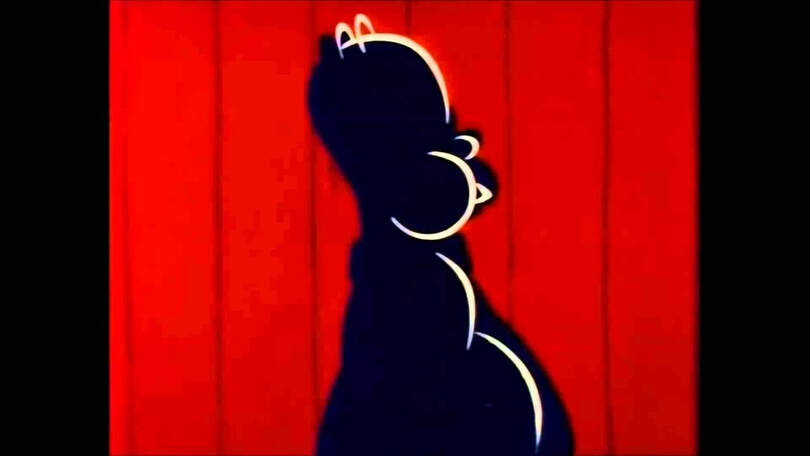 Author Jorge Louis Borges once famously said words to the effect that “a novel is a piece of writing that has something wrong with it.” Borges preferred the short story, regarding the novel (especially the epic) as a stale, deathly form. And while many writers and readers would disagree with Borges (maybe most), even they would have to concede that there is a slump, an air of sluggishness, that starts to seep into all but the most superlative novel-length works around the second half of the story’s midpoint. Entire books have been dedicated to solving the problem posed by this structural sluggishness in the second act.
The short story obviously doesn’t have the same problem as the novel, though the concision of the form brings with it other problems, like precluding certain aims that a novel can better fulfill. Or maybe not. Have you ever read a short story that was so satisfying, so brilliant at encapsulating all of life’s complexity, that you finished it feeling like you had just read an entire novel? It’s a rare occurrence, but it does happen from time to time. A Good Man is Hard to Find by Flannery O’Connor is just such a story. Some people find their way to the short story for more prosaic, less intellectual reasons than Borges. Raymond Carver may have been a master of the form (I think he was), but he only took it up because his day job at a sawmill didn’t leave him enough free time to work on a novel. Other writers—especially during the Golden Age of the Pulps and the later tsunami of “men’s mags”—wrote shorts because that was where the money was. I certainly don’t claim to be a master of the short story, and neither do I write it because I have a philosophical or aesthetic beef with the novel. That said, I don’t really do it for the money, either, as my bank account can easily attest. And I have more than enough free time to permit me to write another novel, should things take me in that direction. Still, I’ll cop to a great fascination with the short story, and more than a bit of frustration with my inability to break the mystery of the form down into a set of discreet rules or guidelines. If, as Borges also said, “art is fire plus algebra,” maybe I’m spending too much time with my calculator and not enough time rubbing two sticks together. I mean, maybe I’m just overthinking it. If one spends too much time pondering their failures and missteps, they’ll cease to move altogether. There’s a parable about a centipede shuffling happily along a green leaf, who encounters a red ant, its antennae dowsing. “How do you move all those legs?” the ant asks. The centipede, after pondering the question a moment, discovers himself paralyzed. Presumably a shrew or a toad came along a bit later to devour the poor insect. Maybe the ant set him up, asked him that question just to throw him off his game, immobilizing the pathetic arthropod in the hopes that he (the centipede) and not the ant would get devoured? Anyway, let me tell you about my own centipedal problem, which revolves around a dispute between two men long-since dead, modernist writer Anton Chekhov and English polemicist William Cobbett. No, the men didn’t have a spat during their respective lifetimes (it would have been hard, as Cobbett died well before Chekhov’s birth), but there are bits of their aesthetic philosophies which seem to disagree with each other, or at least jar when I attempt to resolve them one to the other. Briefly, Anton Chekhov, in personal correspondences, put forth the principle that every element in a story must be necessary, and that irrelevant elements that never come into play in early drafts should be removed in subsequent drafts. This has come to be known as “Chekhov’s Gun.” If the author mentions a gun over the mantlepiece in the first act, that gun needs to come into play at some point in the story. The cinematic equivalent would probably be an insert or closeup of the gun, which needs to be somehow incorporated into the film, fired and seen smoking preferably before the denouement. Fine and dandy, but here we have William Cobbett coming forward (crawling out of the grave to argue with the Russian playwright), with his concept of the red herring. He popularized the term in association with a literal herring, mind you, employed to distract scenting hounds from chasing rabbits. One would cast about salted, pickled fish, which would give off a strong scent to mask the smell of the hares being hunted by dogs whose olfactory bulbs were no doubt driven crazy by the kippers. But the principle of deliberate misdirection can easily be extended from the hunt to the stage (or the page or the screen). Such misdirection is also the lifeblood of the magician’s act, the ability to shift the audience’s collective attention, especially those “smart marks,” in the crowd who are keen-eyed and vigilant, hip to the tricks that the average magician might employ. The hand is quicker than the eye, however, as the saying goes, and unless the mark is especially churlish (or has wagered more than he can stand to lose), his reaction to being tricked is likely to be one of amusement, even minor joy. Fans of mysteries love to try to solve them in advance, and while there is a certain sense of satisfaction to be had when one guesses right, it can’t be compared to the pleasure felt when one is wrong. But do you see the problem, or rather, the contradiction that’s giving me this minor case of dyspepsia at 12:54 a.m. on a Wednesday night? Misdirection requires saying Look here, while using one’s hands to prepare another trick that the viewer hasn’t anticipated and must not see being setup in order to get the satisfaction that comes with the payoff. It’s a hell of a lot less impressive to watch me pull a white rabbit out of a silk top hat if you see me stuffing the rabbit down there beforehand. Let’s perform a little experiment: Say there are a husband and wife getting ready to have dinner. The husband is seated at the table, bitterly recriminating his wife for her terrible cooking skills, saying that he is miserable with her and wishes she were dead. Quickly he glances above the mantelpiece at an old hunting rifle hanging from a pair of rusted tenpenny nails. We hear his thoughts, in voiceover, as was sometimes employed in the old Alfred Hitchcock Presents shows. It’s a somewhat antiquated device, like the screen going all blurry and the playing of the strings of a harp as we dissolve to a flashback, but it will serve for our purposes. I seem to remember I left a round in there, Hubby thinks, since the last time I went hunting. Quickly he cuts his eyes from the shotgun back to wifey still slaving over the pot, stirring the food with a ladle and then lifting the wooden ladle to her lips to taste her soup. Not bad, she thinks (we’re also privy to her thoughts). “Don’t forget the salt,” Hubby barks, eyes flitting between the gun on the mantlepiece and his wife in the final stages of preparing the meal. “As you wish, dear.” The wife scoops a couple ladlesful of steaming soup into a bowl for her husband, and adds a few dashes of salt to his meal. She’d like to give her own soup some kick, but alas, she suffers from hypertension and must forgo even the most meagre pinch of salt. She carries his food to the table, and he begins to slurp the broth. “Bah!” he complains. “It’s scalding!” “Maybe you should let it cool?” Wifey says, congenially, before walking back over to the stove to make her own much blander bowl. “Bah!” he says again, outdoing the hammiest interpreter of Ebenezer Scrooge for cantankerousness. “It’ll taste awful, either way. And at least if it’s scalding it’ll numb my tastebuds.” And soon, he thinks, eyes drawn again to the gun above the mantlepiece, you won’t be able to poison me with your lousy cooking anymore. Just you wait, you heifer, until-- Suddenly, Hubby’s interior monologue is truncated. He drops his spoon to the bowl, where its stainless steel handle rattles against the bowl’s ersatz China. He reaches his hands up to his throat, eyes bulging, making a choking sound. “What’s wrong, dear?” Wifey asks, her tone still gentle, conciliatory, light as a bird’s coo. Hubby points to his constricting throat, his eyes rolling into the back of his skull, and he topples head over heels, landing on the hardwood floor with a heavy thud. “Hmm,” Wifey says, shrugging her narrow shoulders and helping herself to another spoonful of her own bowl of soup. “Mine tastes perfectly fine.” Then our focus puller tweaks the lens’s optics just a bit to make the condiments sitting on the counter a bit more prominent to the viewer. “Then again,” Wifey says, glancing at the cutglass salt and pepper shakers, “I didn’t add salt to mine.” ... Alright, so this story is not going to win an Edgar, and barely constitutes more than a cliche-ridden vignette. But the point is clear, or at least clear enough for me to put this blog post to bed. The gun mentioned in the first act should not be used at all, at least not by the characters. It was only used by me, the author (or the director, or playwright) to get you to focus on it so that the reader could potentially find themselves surprised to discover that Wifey was the one with the weapon and genuine murderous intentions, despite her demure, submissive veneer. Hubby, for all his rudeness and crudity, was just kind of an asshole, not an actual killer (though his interior monologue suggests he was at least thinking about it). If the shotgun truly did its job in this piece—not firing, but rather distracting you with its potential to fire—I even got away with explicitly telling you (through the husband’s interior monologue) that Wifey was literally poisoning him. Sure, in his musings, it was only an exaggerated way for the husband to gripe about her lack of cooking skills. The full irony is only comprehended at the end of the episode, when Hitchcock, porcine jowls a-waddling, gets in a joke at the dead hubby’s expense: “He said she was poisoning him. I don’t know why, then, he still proceeded to eat the soup.” I understand that Chekov was a master of the short story. Anyone who doubts this, seek out the book A Swim in the Pond in the Rain, which is a peerless work on the major prerevolutionary Russian short story writers. That said, though, tonight I gotta side with the Englishman waving around his barrelful of pickled herrings. The gun mentioned in the first act doesn’t have to be used at all. Does believing this make me a fool? It’s probably one of the things that makes me a fool, something which needs to be added to the list already as long as my nightshirt. But all any writer can hope for is an epitaph similar to the one Hunter Thompson inadvertently proffered during an interview, shrugging his shoulders and scowling from beneath his green eyeshade: “Yeah, I’m a fool, but a pretty good read, too.”  When we were thirteen or so, my buddy Patrick and I decided to go see three movies in one night. This didn’t seem very daunting to me, as I was already an expert at sitting around and consuming a lot of entertainment in dark rooms. Pat was going places, though. He was serious about baseball (his dad had been a pro ball player) and when he wasn’t playing ball, he was always engaged in some kind of structured activity.
Pat never went pro, by the way, but according to a quick internet search, he did eventually become a well-respected surgeon. I’m also happy to report that he is married to a beautiful woman and has two or three lovely kids. I, meanwhile, am still sitting in dark rooms, daydreaming, wasting time. My fortieth birthday is in a few days and I don’t feel a hell of a lot more mature than I did that night we went to the theater. My body has sure as hell aged, though. But back to the story... Because we were too young to drive, my dad drove us to the theater and dropped us off there. It was one of those giant white stone elephants owned by Loews that used to be everywhere, and are becoming rarer and rarer these days. I suspect that soon regular multiplexes will suffer the same fate endured by drive-ins. And, much like the giant malls anchoring the ghosts of shopping plazas, they’ll end up razed to rubble or left vacant, haunted and crumbling temples from another time. I saw a lot of movies in that theater, and while a small moviehouse is probably more conducive to nostalgia, I have good memories of that popcorn-smelling palace. I can still vividly recall its ocean of sky blue carpet stellated with little golden dots, and the glowing videogame cabinets lined up along the wall. I played my first game of Mortal Kombat there, ripped my first beating heart from the ribcage of my conquered foe before an assemblage of praying warrior monks. Ah, memories. Pat and I had decided that we would only buy tickets for the first movie, after which we would theater hop on our single ticket for the next two features. This wasn’t as bad as sneaking in, but we were middleclass kids who went to a Catholic school, and it gave our little evening that extra illicit frisson. The first movie we saw that night was Road To Wellville, an odd, offbeat look at the life of health nut homeopath John Kellogg and his sanitorium in Battle Creek, Michigan. The movie was directed by Alan Parker, who had a demonstrable knack for large music-based productions (Pink Floyd’s The Wall, Fame). He also directed the darkly brilliant Angel Heart, adapted from William Hjortsberg’s incomparable supernatural PI novel. But at the time that hardly mattered to us. For we didn’t really think about the auteur behind the lens. And because Road to Wellville wasn’t that good, we didn’t even think much about the film as it played out on the screen. That said, there were a couple memorable moments in the movie. Like when the man in need of rest and relaxation (played by Matthew Broderick) hallucinates one of the nurses in her Florence Nightingale cap and gown as stark naked. As I remember it, she had a perfectly-toned, evenly tanned supple body, her breast and buttocks perched equally high on her shapely frame. The internet existed back in those days, of course, but I don’t think either one of us had it, or used it much except for school research projects. Naturally, then, the sight of a naked woman doing nothing but being naked was still a wonder to behold. I miss those days. There was only one other good thing about this crapfest of a movie that I can remember at this great remove. And that was when Kellogg’s son, rebelling against the regimen of fiber and cod liver oil, sits at the dinner table, banging his fork and knife on the tabletop. “Meat and potatoes!” he shouts, over and over again, stubborn and unwilling to submit to his tyrannical father’s dictates. After that night, the chant became something of an inside joke between Pat and me. We would burst out with it spontaneously, or sometimes when it was warranted, as in the cafeteria at school. Any time the sour-faced ladies in their hairnets served us something not to our liking, out it came, the protest accompanied by the clack of our plastic trays. Meat and potatoes! Meat and potatoes! Eventually, mercifully, The Road to Wellville ended. We left the theater and went out into the hall, staring down the corridor that separated the theaters from the lobby. Through the plate glass window at the front of the cineplex we could see the last rays of the setting sun highlighting the gold woven into carpet. We let our eyes and minds adjust to the dreamless day world, blinking and walking around on legs rubbery and tingling with sleep needles. Then it was on to Picture Two, Interview with a Vampire. Again, I knew nothing about Neil Jordan at the time, but I would later grow to greatly admire his The Butcher Boy. I think he even wrote a novel or two, in addition to being a fine director. His greatest crossover hit, The Crying Game, about a man who falls in love with a transsexual, proved popular enough to merit a reference in Ace Ventura: Pet Detective. (Spoiler alert: Finkel is Einhorn. Einhorn is Finkel). Interview with a Vampire was much more our speed. Also, at that time I’d already read a Lestat novel or two, along with some Crichton and King (Cujo, I think). But that, and a sprinkling of Joseph Wambaugh, constituted my only flirtations with adult literature up to that point. Interview was dark, both in tone and in literal color scheme. Its sepia and mahogany palette sometimes blanched nearer to black and white so that it felt like a silent Murnau movie, full of ever-lengthening shadows and ever-retreating light. There were naked women galore, as well as a more sophisticated sensuousness lost on our young brains, which processed the sex but not the death. We hardly needed titillation, though, to sustain our interest. The spell of the movie worked on us and the rest of the packed house. We were taken in by the sumptuous decay of New Orleans, its gingerbread fretwork of old buildings crawling with ivy, riverboats floating dreamily on the Mississippi dark as molasses. We were intrigued by the way the vampire seduced Christian Slater, the journalist/audience surrogate, into hearing his story, even though he feared the vampire and found him repulsive. There were also some genuinely moving scenes in the film, too, as when the child vampire, cursed to remain forever in her tiny body, finally rebelled against her state. Her father, Lestat, attempted to bribe her with a menagerie of expensive porcelain dolls in silk dresses. But it wasn’t enough, and in the end she cast aside the childish things in a haunting, shriek-filled tantrum that culminated with her banging discordantly on some piano keys. I can’t remember what precipitated her death, only that the vampires held some kind of quorum in an ancient Gothic theater, then passed sentence on her and her mother. Woman and child were left in some pit, exposed to sunlight where they shrieked, sizzled, turned to cinders that then exploded into powdery drifts of the finest stone. After Vampire we walked out into the hall again. Our legs were even heavier with sleep, the world on the other side of the glass cold and black, and presumably filled with vampires. I was smiling, still game, enchanted by the idea of not only seeing three movies in one evening, but maybe doing this every Friday night. Looking over at Pat, though, I saw that he was already a little weary of it, that he strained for the outside world, fresh night air, sports. Life itself, dammit. Already a small chasm had grown up between us, but it hardly mattered. In a year or two I would be close to completely withdrawn into myself. Then that chasm wouldn’t just exist between me and my friend, but between me and the entire world. And it would only grow larger as more time passed. That, however, was still a ways into the future. The last movie on the list was Pulp Fiction. We weren’t ready for it. For Xillenials— that weird group between the overeducated, underemployed types Kevin Smith showcased in Clerks, and the kids who would grow up knowing nothing but the internet and 9-11--Pulp Fiction was a bit like our Star Wars. Something about it sunk in with us, scarred and impressed itself upon us in just the right way at just the right time. The film started innocuously enough, with a couple sitting at a table in a diner having coffee. Then, out of nowhere, the woman stood up in her vinyl booth, brandishing a big iron, threatening everyone in the restaurant with a string of expletives. Cue the frenetic Dick Dale surfer guitar. Something about the cussing—not just the basic transgression, which was enough for us kids—let us know we were in for something different. It was the creativity of the foulness that made us sit up in our seats and take notice in a way we hadn’t until then. Roger Ebert claims that when he first saw Pulp Fiction, he knew he was either seeing the best movie of the year or the worst one. But Pat and I knew from the jump that it was the best. I won’t recount the whole plot, just say that we sat there, in awe, exchanging looks, unable to quite believe what we were seeing. People were onscreen talking, arguing, debating bits of pop culture trivia, making references to real world things like Big Macs and Quarter Pounders with Cheese. They weren’t staring into the camera, but the way they were referencing the real world somehow felt like a great and exciting new way to break the proscenium arch. Watching John Travolta and jheri-curled Sam Jackson argue about the merits of foot massages was somehow more entertaining than watching a building blow up in a massive action extravaganza. Seeing a man subtly intimidate another man, eating his Big Kahuna Burger, drinking his soda through a straw as if sucking his soul, was better than a sex scene. And here’s the thing: all of that other, more traditional spectacle was in there. There were car wrecks, shootouts, plenty of violence, and a sophisticated kind of sexual patter between Bruce Willis and his girlfriend that left Pat and I stunned. Girls were totally mysterious to us, and women entirely sacred and alien. If we ever talked about sex, it was immature, secondhand crass macho porn crap passed down from older brothers, designed to conceal our fear of the unknown. And here we were, riveted by a diminutive woman talking about how a potbelly on a female is pleasurable to the touch, but makes a man appear apelike. Pulp Fiction had pulled back some kind of curtain, like Sunset Boulevard letting fans peek at the reality of movie stars, or The Godfather letting crowds see power exercised in all its genuine ugliness. Tarantino wasn’t patronizing us. He was one of us. Or at least Tarantino had been someone like us, who went to the video store (and even worked at one) and once read comic books. He had Kevin Smith’s encyclopedic mind for pop culture but arranged it in Pulp Fiction so even those who didn’t know the world secondhand could admire and believe it. The wildest scenes had the quality of crazy but real-life incidents, either witnessed or recalled, by a master raconteur. Even as you saw it on the screen, you heard it being told (I guess that’s why he called it Pulp Fiction.) Did I ever tell you, Tarantino seemed to say, about the time me and my buddy were trapped in a pawnshop with this leather gimp? For the first time, Pat and I became aware that someone made movies, that the words coming out of the actors’ mouths had not been written by committee. Neither, though, had the words been written by a novelist and later adapted by a screenwriter. It had all been written by just one guy, and solely for the screen. And that one guy who wrote all those words also just happened to be behind the camera the entire time. Each generation discovers that dialogue is an art, a constant volley to keep a ball in play, in their own manner. Hundreds of years ago they had Shakespeare. Later generations had to content themselves with a Mamet or Woody Allen. Tarantino might be even further down the trough (the cinematic equivalent of Stephen King’s quote about being the “Big Mac and fries of literature” comes to mind.) But damn it was tasty, anyway, especially for our starved palates that had been deprived even the meagerest fare up until that night. After that, Pat and I wanted to make movies. We talked about it quite a bit, and we may have even written a raggedy-ass script or two. But we never had the balls to pick up a camera (even a camcorder), to try and thereby risk failing. It hardly mattered, though. My destiny was not to make movies, to collaborate with another two hundred or so professionals to bring my singular vision to the screen. My destiny was to sit alone in a room and pound the keys. Pat, of course, was destined for happiness, which may be a hell of a lot better than making movies, or writing books, or painting. I still have a soft spot for Pulp Fiction, and I dug Once upon a Time in Hollywood, but somewhere along the way I stopped following Tarantino. Still, he was for our generation a bit like Scorsese was for the previous one. Quentin’s fellow Gen Xers will bridle at that comparison (which, admittedly, can only be carried so far). But that’s mostly because he is their contemporary, and professional jealousy comes into play there in a way it doesn’t with an eminence grise like Martin Scorsese. Pat and I never went back to the theater after that, not to see three movies in a row, or, for that matter, even one movie. And maybe that’s for the best. Six hours and some change is a long time to spend in the dark, even for someone who’s as comfortable with darkness as I. 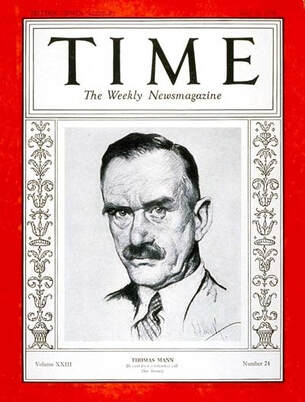 War is the cowardly evasion of the problems of peace.” I can’t find the quote online in the original German, but it’s attributed to the German writer Thomas Mann. Most probably it was excerpted from his Gedanken im Kriege (Thoughts in Wars would be a direct translation). It’s a quote that’s come back to me time and again through the years.
I suppose one’s first reading of the quote would be to view it as antiwar, but I’m not quite sure that gets at the heart of what Mann was saying. War sucks, sure, but inherent in Mann’s words is the idea that peace is even harder. Peace comes with its own burdens, which, believe it or not, make war a kind of psychic relief from the complexity and nuance that some people find excruciating. There’s some Bukowski story I read a million years ago that’s relevant here. Buk’s alter ego Chinaski is sitting in a bar (or maybe a bus terminal, I frankly don’t remember) and some hippy kids sidle up to him. One of the hippies, wearing a grimy army surplus jacket, asks Hank his opinion of war. To which Hank characteristically responds: “When you to the grocery store, that’s a war. When you get into a cab, that’s a war.” Melodramatic? Maybe, but I think he’s right that ultimately everything is a war. He even had a poetry collection titled War all the Time. I can’t remember exactly what the hell I was thinking when I joined the Army. It was only a little more than a decade ago but it might as well be ancient history, lost to the mists of time. All I know is that at the time I walked into that recruiter’s office, I was feeling pretty desperate. I was a classic failure to launch, a wannabe writer in his mid-twenties living at home with his mother, gradually growing weirder and more pathetic by the day. For a couple years there, I worked as a pizza deliveryman, but I didn’t enjoy having my car pelted with rocks by kids in the public housing complexes. The deductible could only cover so much, and only so many times. Also, the idea of potentially losing my life over a Meat Lover’s Supreme and a two-liter of Mountain Dew seemed ignominious, even for a creature as pathetic as I. Eventually I wisely quit that job. After that, I supported myself (to the extent I could) by taking whatever jobs I could land through a temp service. For a time there I had a decent gig doing background checks for a firm called General Information Services. I sat in my swivel chair, squinting under the fluorescence, sneaking looks at the legs of the women around me, crossed and sheathed in black or tan stockings. Alas, that gig didn’t last, and after an excruciating stint working at the Otis Spunkmeyer muffin factory, I decided I would rather risk dying than continue living this way. I’d threatened to join the army a couple of times, but my mom had always dismissed my threats as hollow. One day, though, I drove the recruiter’s office where it was located in the center of a suburban shopping plaza with a brick and stucco facade. They must not have been getting much traffic, as I literally had to rouse the buck sergeant behind his desk from a deep sleep. Later that night I went home and told my mother what I had done. She promptly called my father, which shows the gravity of the situation, as he hated her and she hated him. I don’t remember much about what they said (I was already locked in my mind, lost in my own zone at this point). I just recall her shouting, “Yeah, but I didn’t think he’d actually do it!” I was in terrible shape physically, but somehow forced my soft and flabby body through the whole nine weeks of basic training at Fort Benning. I did not emerge from the experience “Born again hard,” as Gunnery Sergeant Hartmann observed of Private Pyle in Full Metal Jacket. But on the plus side, neither did I put a round into my DI’s chest and then fire one through the back of my skull, either, a la Pyle. The military simplified everything. In the real world, I had felt constantly stressed about money. I had felt pathetic and poor and out of place, weak and neurotic and sexless, a loser in a society that only tolerated winners. Delivering pizzas, I felt like a bug with a slimy carapace scurrying up to the doorsteps of these stone McMansions filled with happy and prosperous people. I drove my mom’s crappy Aerostar minivan through the suburbs, surrounded by sleek, shining Benzes and big black SUVs (usually with impressive fiberglass speedboats tailed to trailer hitches). In the army, though, all of my bills were paid, meals were provided, and hierarchy was based on rank alone. And the loss of outward identity (down to shearing off my hair) let me develop a stronger interior life. I no longer felt insecure. I was too faceless, anonymous to pretend to paranoia. Who the hell would bother looking at me here? How could anything be personal where the drill sergeants barked at literally everyone, berating them with profanity-laced insults? Back in the real world, I had felt the constant ache of failure that went with not having a girlfriend. I’d definitely had no prospects for marriage, or the social or emotional skills to develop anything like a meaningful relationship. Every day after work, whether at Pizza Hut or Otis Spunkmeyer, I would smoke weed in my bedroom and masturbate to porn. I was wrapping myself deeper into a cocoon of seeming pleasure. But it was really just deadening everything inside me, including all ambition and the pain, which I should have recognized was unavoidable. It would have been healthier to face it and deal with the hurt and fear. But in the Army I was only around other young men, most of them horndogged up most of the time, just as sexually immature and crass as me. That said, a few already had spouses, real responsibilities, and even kids. Again, everything in the army was simpler, if not always easier. But I’m speaking only of the regimentation of Army life, not war itself. Eventually I got orders for my first duty station (Darmstadt, Germany) and from there deployed to Iraq (though we started out in Kuwait). The experience definitely changed me, made me more aware not just of my own mortality, but my humanity, as well as my heretofore undiscovered sense of shame. I was ashamed of what we were doing, and what I had done. The war had woken me up from the slightly unsettling dream that was my previous life, unpleasant but too undramatic to merit the title of nightmare. Is that easier, though, than living on the homefront in supposed peace? I think so. It probably requires greater fortitude to, say, clean toilets at a ballpark after a big game than to man a minigun while hanging out of a Blackhawk helicopter. Staring down at villages of mud huts, relicts of ziggurats, and fields of crops shimmering under a blazing sun at least offers scenic vistas of an ancient land. It definitely beats staring into toilet bowls, even when you factor in that toilet bowls, unlike the fields in Mesopotamia, aren’t seeded with men in burnooses with AK47s. Back when I was in the service, being a soldier still sort of conferred a certain kind of respect on the person serving. Being a soldier, I didn’t feel quite as alien or out of place in America anymore. I had passed through some membrane, performed some ritual required to psychically bond people across class and culture lines that was once an important aspect of becoming a citizen. Of course you sensed the cynicism beneath the praise and respect with which we were showered. The whole patriotism industry feted you because it was what big war profiteers like Lockheed and their lobbies and their rent boy politicians wanted. And guys who had the audacity to cite love of country as their reason for joining made sure to get the best sign-on bonuses they could, just like everyone else. But since you were the beneficiary of all this cynicism and you got all this smoke blown up your ass, you didn’t really question it. And naturally you knew that in their hearts of hearts, the Lee Greenwoods with their jingoistic yokel acts and the businesses giving soldiers discounts thought that we were suckers. And they were right. It takes a very special kind of mark to try to fabricate meaning out of dying for no reason, on behalf of people who deep down really don’t give a shit. Then think about the damage war does to the people in these impoverished countries, the goatherds and farmers growing their bitter crops in the mud. Think about the pain you put your family through, even if you don’t die or get severely injured, just making them worry about you while you’re downrange. But these are all thoughts I only have in hindsight, that, as most, were minor inklings, registering as mere cricks in the neck at the time. People would stop you in the airport and thank you for your service, too. Vets from previous wars would shake your hand, treat you with respect. Bearded, hippyish dudes who’d been in Vietnam might saddle up to you for a conversation, or an older man in suspenders might pigeonhole you to talk about war. Combat, of course, was a much more intimate affair in their days. And nothing we did in Iraq could compare with what happened at, say, Khe San, and definitely not at the Battle of the Bulge or Betio. But again, we were the recipients of love and praise, and whether or not it was misplaced (it was), it felt good and we didn’t question it. It isn’t just the praise and ego stroke that made being in the Army an alluring and ultimately simplifying illusion, preferable to living in the real world. Nor was it just the wearing of a uniform and feeling the high that comes with surrendering one’s will to that kind of fascistic power. It’s the way that being in the military breaks one’s life up into easily understood chapters. It gives one’s life a narrative aspect, a B.C. and an A.D. dividing line between the person one once was and the one they have become. These things happen in normal, nonmilitary life (I assume) in a more nuanced and complex way. Eventually you go from a boy to man, or a girl to a woman, without the delusions or pageantry. I remember coming home on one of my first leaves and feeling a great sense of pressure constricting around my chest like a band. And I remember another band fastening itself around my skull as if I were trying to take a nap in a house with a slow but persistent gas leak. I could feel that the people around me had been going about their lives—dating, working, struggling, in an unpraised but frankly admirable kind of silence. They bore the banality, the repetition, everything I had fled when I joined the army. They labored in a fog unrelieved by action, combat, awards, changes of locale imposed by whoever at Brigade level (or even higher) cut orders. To not be shuffled around the world, to wake up and face the same people every day—coworkers, spouse, children—seemed like a great burden. On leave I would go to coffeeshops or to libraries or to the pharmacy, and I would just steal glances at the people working there. I’d marvel at their bravery, their ability to endure this nondescript, unbroken continuity of time lived in the same place, basically the same day, relived again and again. Their identities and lives were organic, not something handed to them by someone else. Their time was not bisected and parceled, sliced and shuffled by some clerk at Operations deciding whether to send them to Fort Bliss or Fort Huachuca. Sure they had to work eight or even twelve hours a day, but when the day was done their time and mind was theirs. In the Army, even when we shammed and hid from work, our lives and bodies and souls belonged to the institution. We could mock it and make jokes, develop codes to express our disgust (FTA supposedly meant “Fun Times Always,” but everyone knew what it really meant). But we had exchanged something we could never get back, something that everyone else still had. A lot of the civilians I stared at on leave seemed happy. And many of those people no doubt were happy. But I think they were brave, too. A lot braver than me. I think, ultimately, that Thomas Mann was right about war being a cowardly escape from the problems of peace. Assuming, that is, he actually said it. 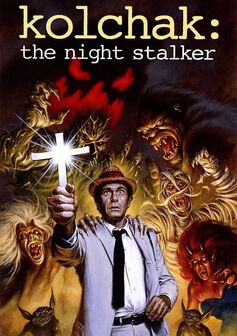 Kolchak: The Nightstalker is a much better than average TV show from the seventies about a reporter who works for a newswire service. The episodes typically follow a standard format: Karl Kolchak is driving around in his yellow Stanger when a report of a murder or robbery comes over his bootleg police band radio. He then cuts the wheel, heads to the scene of the crime, and shows up, either brandishing his recording device or snapping photos.
A surly detective or harness cop at the crime scene tells Kolchak to take a hike. But Karl’s doggedness allows him to either snatch up some clues or secure the interview that gives him an angle on the crime, usually one overlooked by the cops. As the investigation deepens, Karl begins to suspect that more than foul play is at work. Something supernatural is afoot. His boss at INS (which stands for International News Service here, not Immigration and Naturalization Services) asks him how that article’s coming along. Karl rushes headlong into a description of how he thinks a mummy or vampire or killer robot or Aztec god has been unleashed on Greater Chicago. Karl’s boss, Tony Vincenzo, at this point will grab his stomach or chest, looking as if his ulcers are leaking acid. Of course, he doesn’t go along with Karl’s theory, and asks Kolchak if he maybe needs to take a vacation or spend a couple months in the bughouse. After doing his Italian version of the old Fred Sanford chest clutch, Tony tells Karl to scrap the mummy/killer robot angle and get down to some real legwork. But Karl remains persistent, and at this point in the episode he goes to an expert in whatever esoteric lore relates to the murderer. He usually interviews a prim man with a tight suit and aquiline nose, who scoffs at the idea that the monsters of antiquity are real. But said-person still supplies Kolchak (for a nominal fee) with some info about what tradition tells us about the chink in said-monster’s armor. Kolchak starts cogitating, usually in his office, seated at his desk across from a couple of other INS staff. One’s a blue rinse biddy who plans the paper’s crossword, and usually provides comic relief as well as a bit of info. The other’s a waspy, priggish foil with a sandy-brown mustache, and a simpering manner that, in previous times, served as shorthand for possible homosexuality. After reading and maybe gathering a totem or two, Kolchak goes to face the monster in its lair. This involves pulling aside some rotted boards over the window of a condemned house or lifting a manhole cover and literally descending into the underworld (or at least the Windy City’s sewer system). He has a confrontation with said-beast, and sometimes even snags a photo or two of the monster before vanquishing it. After dispatching the monster, he clutches his camera proudly, believing the evidence will prove he’s not in fact certifiable, but was right all along. Alas, either the pictures come out blurry, or the monster, in its confrontation with Kolchak, slaps the camera away and destroys the film. If that doesn’t happen, the detectives or harness cops who previously hindered Kolchak show up at the last minute and wreck or confiscate his evidence. The episode usually ends with Kolchak seated at his desk at the INS office. He breaks the fourth wall and stares out at the audience as he records some final notes and musings on the now-closed case. In essence, he says, “You can believe it or not, but it happened.” That’s it. It might seem like I’m being a little dismissive of Kolchak, treating it as a paint-by-numbers affair. But the truth is that it’s an enjoyable and intelligent show, with some fine performances and some genuinely frightening moments. That has more to do with the details, though, than the broader picture and the premise which really can’t work for long (more on that later). Everything good about the show starts with character actor Darren McGavin. He was immortalized in the classic film A Christmas Story, in which he plays a quintessential fifties dad who’s gruff but genuinely loves his wife and kids. Contra Christmas Story, in Kolchak McGavin is not a gruff paterfamilias, but rather a squirrely, single, somewhat undersized reporter whose main asset is his determination. His greatest liability is his mouth. He can come close to charming or buffaloing someone, but just when he’s on the verge of getting over, he makes a cutting remark or ill-timed joke. He’s loveable, irascible, and immediately recognizable in his seersucker suit, straw porkpie hat, and white sneakers (wearing tennis shoes during workhours was considered eccentric in the Seventies). All of the supporting cast members are also more than up to the task. Old TV acting warhorse Simon Oakland is especially sympathetic as the burly, longsuffering news chief. He happily trades barbs with Kolchak, muting his affection for the reporter beneath a gruff exterior, but it’s plain he ultimately respects and trusts Karl. As is the case with a lot of old great shows (like Miami Vice) soon-to-be-famous actors pop up in supporting roles, usually as villains. Eric Estrada, of Chips fame, plays a playboy in possession of a magical Aztec flute. It’s one of the more preposterous episodes, but he brings sufficient menace to the role to overcome the script’s defects. Tom Skerritt stands out as a Satan-worshipping senator who has traded his soul for political power. Unlike most actors guesting on the show, Skerritt undergirds his performance with a subdued gravitas that works better than the hammier displays that usually get turned in. He plays the evil Senator as a man who regrets his terrible decision, yet knows he cannot unseal the bargain he signed in blood with Old Scratch. And when he offers a similar bargain to Kolchak—maybe a Pulitzer instead of a corner desk beneath a clattering El train?— we see Kolchak’s face go through the whole range of emotions. The scene shows not only McGavin’s range, but how unplumbed the depths of this character remained. One has to wonder, that if Kolchak’s conscience and his past—his life, for God’s sake!—had been better mined by the writers, if the show might not have lasted longer. David Chase, who would later go on to great acclaim writing The Sopranos, supplied a bunch of story ideas and teleplays for Kolchak. Robert Zemeckis, of Back to the Future and Forrest Gump fame, also did some work on an episode about a headless motorcyclist from a defunct biker gang. The City of Chicago in the mid-seventies is also character in its own right. Some of Kolchak was shot on-location, other bits on Universal backlots. But the sweeping shots of Chicago’s Gold Coast and Magic Mile usually feature in the episodes, if only during credits sequences. Lake Michigan slapping against the coast’s white sands is majestic, looking strangely exotic for a Midwestern locale. From certain angles, and in a certain light, it could be confused with South Beach (if you cropped out the hideous Hancock Building and a couple other skyscrapers). Kolchak was popular with audiences and critics, but actor Darren McGavin grew restless near the first season’s end, and asked to be released from his contract. Why? Well, Kolchak had some problems, despite being a very good show, made even better by the nostalgia factor of these intervening decades (time sprinkles its fairy dust liberally upon our misremembered past). Horror maestro Stephen King pointed out what he considered the show’s fatal flaw in his magisterial book-length treatise on horror, Danse Macabre. His gripe is that the show’s serial format strains the audience’s suspension of disbelief. It’s unfair to ask them to believe that Karl could encounter a new monster every week. One encounter in a lifetime with a werewolf, a vampire, a killer robot, or a witch might be believable. How, though, in a mundane world, can we believe that a seasoned reporter for a small news service could keep encountering supernatural beings? King’s beef was ultimately McGavin’s beef. The actor quit the show at the height of its success, initially citing restlessness and exhaustion with his workload on uncredited production duties. But when he put in his two weeks’ notice, he was more specific: he thought the show was devolving into a “monster of the week” thing. The problem for me, though, isn’t so much the straining of audience credulity. It’s that none of these supernatural events seem to have a lasting effect on Kolchak or any of the people around him. Karl, at the beginning of the series, is your typical grizzled beat reporter. We know little about his personal life (and learn little throughout the course of the series). But it’s safe to say that he does not believe in ghosts and goblins. He doesn’t even seem like the kind of guy inclined to admit their possible existence after having a brush with one. He’d be more likely to assume a Scooby-Doo-esque plot afoot, some guy with a grudge or an agenda wearing a rubber mask and trying to scare people. But in the first episode, Karl has a confrontation with what is undeniably a monster, and he is subsequently forced to believe. And in the next episode, he has another confrontation with another ghoul. To give the makers of the Kolchakverse the benefit of the doubt, let’s say there are certain stories Kolchak reports on that don’t have a supernatural element. Between monster cases, Karl writes up pieces about tax-dodging businessmen, lovers whose simmering quarrels boiled over into murder-suicides, jewel heists, etc., only these stories don’t appear on The Nightstalker. Fine, but even granting this, Karl is still encountering supernatural beings every other week instead of every week. At what point does Karl—busy and practical as he is—stop and ask himself what all this supernaturality means? When does he stop, however briefly, to ask how the impossible has not only become possible but routine? He might start to question his sanity, or perhaps some alteration in the laws that govern the universe. He might consider that there had been some kind of leak in the membrane heretofore separating fantasyland from reality. It’s not just Karl, though, who should eventually start asking these questions and being changed by these events. His boss, Tony Vincenzo, despite all his grimacing and ulcerated grumbles, sometimes makes minor concessions to Kolchak’s pet theories, crazy as they might seem. He wavers enough, in fact, that even he should eventually start to either question his perception or alter it to fit this new reality. Kolchak, ultimately, would have had to become a magical realist show to survive. The mounting case files on vampires and werewolves would eventually have had some spillover into Greater Chicago, and then to the rest of the world. Even with the cops gainsaying Karl’s word and smashing his cameras on a biweekly basis, someone would eventually see what Kolchak saw. And be unable to dismiss it. What then? Well, then the seam torn in our reality by monsters would get ripped into a gaping hole. And we would be faced with a Chicago that would require some hard worldbuilding. David Chase would have to take a turn toward the Tolkienian. For starters: Everyone would come to not only accept werewolves or vampires, but view them with the same exasperated disdain and contempt they had for muggers or rapists. The episode would start with Kolchak in his yellow Mustang, as per usual. Only now, the police band would feature banter like: “We got two vamps trying to rob a blood bank on the South Side. Tell SWAT we need ‘em here pronto. And bring plenty of stakes and garlic.” Karl would cover the case, then head back to INS to file his report. He’d sit down at his desk, and, with the El clattering on the tracks outside his window, crack his knuckles before attacking the Underwood. All of a sudden, Tony would burst through the pebbled glass door and start barking: “Karl, did you read that report yet about the hair samples on that open mauling case? And are you aware that they are lycanthropic in nature? Then why did you let the Tribune scoop us on that one!” Would it work? It might. On the other hand... Some people would argue that this change to magical realism isn’t necessary. They’d also argue vehemently that Kolchak never should have been cancelled. They might even have the temerity to suggest that McGavin should have gotten over himself and sucked it up in service to the fans. Kolchak, they would say, worked just fine in its originally-premised form, notwithstanding what King wrote and what McGavin said. Years ago I read this book about creating characters, which explained the difference between flat characters and round characters. In brief: flat characters exist mainly to propel the action. They react, especially to dangers, but they don’t reflect. They can’t. The nature of the format won’t allow it. Indy in the Indiana Jones films is a flat character. He literally has an encounter with the Ark of the Covenant in the first film. Granted, he averts his eyes, but he can still feel the ghosts susurrating around him, and hear their forlorn and bedamned howls. And he sees the effects of the carnage after the Nazi esoterics get their faces melted off. But rather than finding his hair turned white and seeking solace in a hermitage, Indy goes on being a badass and brandishing his whip. In a sequel he finds the Holy Grail, having another transcendent experience which somehow fails to allow him to transcend anything. There’s an argument to be made in favor of the flat character, especially in adventure stories. And there’s also an argument to be made that some real people are, in essence, flat characters. This isn’t an insult. Someone, in answering criticism lobbed at Arthur C. Clarke’s Rendezvous with Rama, pointed out there was a perfectly good reason the astronauts didn’t seem like deep people. Candidate selection for such jobs filters out those who don’t have a hardnosed, unflappable disposition. A poet sent into space on a tough mission might be tempted to stare out the ship’s window and wax about the Earth’s beauty, rather than focusing on the task at hand. A reflective Indy wouldn’t be able to run fast enough to escape the boulder hurtling toward him. A Kolchak who pored over books for any reason except to find the monster’s weakness would, once he started reading, never cease. He’d end up cloistered away in some wainscoted library, a bibliophile or maybe even bibliomaniac, stroking the covers of vellum tomes like a lover’s cheek. I know nothing about acting, but think that most actors find flat characters unsatisfying to play for any length of time. Once every few years in a feature film sounds doable. Every week for years on-end might become a slog through the mire that no amount of money could make easier to navigate. Kolchak becoming “round” might have been interesting, and it might have solved the problem posed by the show’s internal contradictions. It definitely would have allowed McGavin to take his character in a fresh direction. The idea might have even been enough to tempt him into returning for a second season. But ratings would have tanked. And people’s fond memories of the show would have been soured by what they perceived as pretentious attempts to elevated Karl to more than a monster hunter. Maybe it was best left with its internal contradictions unresolved. As the sages of the ages say, “If it ain’t broke, don’t fix it.”  Last year I read a little less than two-hundred books. That’s a lot, I think, even for me. And because the year’s over, now’s as good a time as any to list the ten best books I read in 2021, in order from the good to the great.
Both nonfiction and fiction are eligible. The only limiting criteria is that the works be in the English language. That caveat is hardly necessary, as I didn’t read enough German-language books last year for it to make much of a difference one way or the other. And my Spanish is nowhere good enough yet for me to have read anything besides primers, and Juan va al Supermercado is not cracking my top-ten. And now, without further Apu: 10. The Glamour Factory: Inside’s Hollywood’s Big Studio System by Ronald L. David. “Exhaustive” and “entertaining” aren’t two adjectives I’m usually inclined to pair with each other, and yet this time the pairing’s warranted. This guy does such a good, thorough job of showing how the various Hollywood backlots in the Golden Age were their own ecosystems. These worlds-within-worlds had their own strange rhythms, warrened with screenwriter sweatshops and prop departments. Yes, there were cynical calculations constantly being made by the money men with the green eyeshades and the schmattas-turned-producers, but the magic was real, too. It wasn’t uncommon to see elephants convoying beneath a plaster Tower of Babel, or to see cowboys and Egyptian pharaohs in the cantina eating ham sandwiches together. There’s some dishing and scandal, but the proceedings aren’t as sleazy or schadenfreude-laden as those of Kenneth Anger’s Hollywood Babylon. Still, did you know Humphrey Bogart was bald, and only a very skilled wig craftsman with a very expensive hairpiece kept us all none-the-wiser? 9. The End of Everything (Astrophysically Speaking) by Dr. Katie Mack. How the hell do you write a book about the end of our universe, the obliteration of everything we’ve ever known, and not have it be a bummer? Dr. Mack has done it here. She explains cool-but-terrifying concepts like the Big Crunch, an unpleasant corollary to the Big Bang that got us all here (according to the background radiation signature, anyway). It’s not all grim and apocalyptic though, as Dr. Mack posits an astrophysicist’s version of the Katechon using calculations I can’t begin to understand. In a nutshell, she says that a “leak” in gravity means that there could be many adjacent universes for us to escape to when things go to shit here. It’s a fascinating, engaging book that’s as wondrous as it is terrifying. And most important for the knuckleheaded layman, it’s accessible without being patronizing, which can sometimes be a problem when the oversimplifications become too simple or burdened with dad jokes. 8. Weird Tales: The Unique Magazine, Spring 1988 George Wolfe, Gene Barr, Others. Did I say I couldn’t include anthologies? Regardless, this one deserves to be on the list. The quality of these stories is uniformly strong, and their content and style’s diverse enough so that it doesn’t feel like slogging through another book of Lovecraft pastiches. A standout tale is what for me is the definitive F. Paul Wilson story. The piece deals with an ancient, chairbound lady who uses a young maid’s body as a vessel so she can have sex with a confused, then mortified handyman; imagine Avatar with a pervy geriatric broad with a headful of blue rinse Youth Dew and you’re in the ballpark. The black and white illustrations are sumptuous, lurid, and the thing is a true pulptastic objet d’art in its own right. I wish I were better at hanging onto things, as this would have been a cool addition to my nonexistent collection. Alas, perhaps it’s better to lend and lose than to horde and let said-collection molder and gather dust, untouched. 7. Nine Inches by Tom Perrotta. I’m a pretty omnivorous reader, though I tend to enjoy straightforward genre forays more than the intentionally literary. I’ll read John Cheever or Raymond Carver and can even admire it. But I’d rather forget the style and focus on getting lost in the content, preferably supernatural or otherwise-speculative. That said, I’ve always had a soft spot for Tom Perrotta, and his gimlet-eyed view of seemingly normal people in the suburbs. He can be both scathing and compassionate, sometimes within the space of a single sentence. His stories about youths struggling with their sexuality in high school evoke that strange, pained romantic ache that still occasionally stirs when I think about my own past. The world of normal people, struggling with mortgages and driving their SUVs, is as alien to me as it is familiar to him. I see these people at the grocery store exchanging pleasantries, or queuing up dutifully at Starbucks, but I don’t know what that world looks like from the inside. Perrotta lets us not just peek but gaze into this seemingly well-ordered universe, where people are experiencing just as many crises as the most desperate, albeit more quietly. “Hanging on in quiet desperation,” is the English way, and Americans prefer the meteoric ascent of Horatio Alger (or even Tony Montana) rather than dealing with the nuances of class. As Paul Fussell noted, we’re even required to pretend class doesn’t exist in most contexts, unless you want to look like a real sorehead. That makes Perrotta, with his keen eye for social hierarchies and no shyness about peeling back the layers, a massive outlier in modern American letters. No, he’s not the only one writing about class but he’s the only modern scribe I’ve found who writes about it without making the experience excruciating. And when you consider that what should be tedious closet dramas are painfully funny tableaux in his hands, that makes him a genre of one. Which is the highest compliment you can pay a writer. Perrotta also describes action much better than most literary writers. See Exhibit A: a story about an Asian overachieving softballer with a “Tiger Dad,” who hops out of the grandstands when his daughter gets beaned with a fastball. Like Mike Judge, Perrotta comes off more like an ex-athlete than an artiste and something about his roughness is refreshing where we expect the stultifying. 6. Columbus and the Quest for Jerusalem by Carol Delaney. Here’s another reminder that those chapters of history about which we think we know the most are still occluded with mysteries, unexplored truths, and as-yet unchallenged lies. For some, Columbus is the embodiment of the adventuresome spirit that has animated Western exploration for centuries. For others, he’s a genocidal sociopath whose complete disregard for the Natives already inhabiting the Americas makes him a wrecker of all that was beautiful in this precolonial continent. In progressive theology, he functions a bit like Lucifer in the Bible, the original angel cast down for his great hubris who has damned all associated with him. The truth, as usual, is somewhere in the middle. The book is filled with fascinating details, like how Columbus barely avoided being killed in mutiny, or how his dead reckoning navigational skills rival our most sophisticated instruments today. Most crucial of all, the fulcrum upon which this revisionist thesis turns, is that his brother was actually the one who started the brutal killings of the indigenous people. Columbus, sadly, was unaware of this, rotting in prison for failing in the task for which he would later be lauded, and then again condemned, finally subjected to iconoclasm. Madame Delaney circumnavigates the centuries with a brave and intrepid sort of aplomb, without malice or agenda, a kind-hearted conquistador, if such a contradictory thing can exist. 5. Writing your Way to Recovery: How Stories Can Save our Lives by James M. Brown. “Art isn’t a support system for life,” Stephen King once observed. “It’s the other way around.” No one struggles fundamentally with survival, the question of “To live or die,” quite like the addict. And yet, if this book had only been a tool, a workbook to be completed as part of a therapy regimen, it wouldn’t be on this list. It’s here because the balance between aesthetic considerations and spiritual advice is so perfect. Ultimately its greatness lies in the book’s focus on developing and honing craft as much as on breaking free of the hold of drugs. Brown has the clearest voice and most enviably clean style of any writer currently working. It always pisses me off, because I’m one of those magician’s understudies always trying to find out how the trick is done. But, like Hemingway or Sherwood Anderson, his seemingly simple style can’t really be broken down into its constituent parts by examining it word for word. Take it from me; I’ve tried. It almost drives a man to do drugs. 4. A Swim in the Pond in the Rain by George Saunders. I somehow managed to get through not just my undergrad years, but through a master’s program. And yet I spent most of my college days seated in a classroom feeling my time being wasted in excruciating, brain-numbing, and pointless ways. Occasionally I found a brilliant professor who was passionate about their subject. And then, for that short time, the classroom became everything we associate with college in our hazy, ivy-clad, tweed and patched corduroy fantasies of what it should be. A Swim in the Pond in the Rain isn’t so much a book as a master course with a brilliant, shatterpated professor whose enthusiasm for Russian literature is contagious. He makes you care about his obsessions, and does it so ably that by the end of the book, you find yourself sharing his love. This is even more remarkable when one considers that none of my favorite Russian writers (Ivan Bunin, Dostoyevsky, etc.) have pieces in this collection. A lot of lesser-known and seemingly uneventful slice-of-life stories by Turgenev or Tolstoy appear here, tales I would have found interminable slogs without this genius exegesis. Hell, about the only story I dug on its own terms, without Saunders’ scholarly gloss, was Gogol’s old surreal yarn about the sentient, walking, talking nose. Someone (I forgot who) once said that the only sin an artist could commit was to be boring. Perhaps the greatest act a teacher can perform is to take what we might otherwise regard as boring and make it not just tolerable, but actually exciting. I’ve never had this much fun reading about peasants musing about birds while strolling through the woods, or seeing kulaks suffering silently at small train stations in remote villages. And aside from the stories, Saunders’ observations about aesthetics and musings on his own life are also worth their weight in gold, or at least worth quoting and remembering. 3. Writer of the Purple Rage by Joe R. Lansdale. There’s a big difference between humorous writing and funny writing. “Humorous” involves an intellectual reaction, the mind responding to something and categorizing it. Funny is what we call something when it elicits laughter, an involuntary reaction that’s hard to get even from a movie or standup comedian. And in the theater or at the club, the performers have the advantage of plentiful audio and visual cues. It’s much, much harder to write something that’s funny enough to make you laugh. This collection—with its stories about rednecks lighting themselves on fire, battling alligators, and accidentally chopping up groundhogs—is simultaneously funny and horrifying. I may have read one or two better books this year, but nothing else gave me this kind of pleasure. How many books can you classify as painkillers, works that really make life with all of its myriad boredoms, disappointments, and agonies somehow more bearable? Also, like his forebear in short mass market tales of terror, Richard Matheson, Lansdale is ten parts talent to zero parts pretension. He’s so entertaining (and occasionally gross) that you forget he’s brilliant, and has a serious soul to go with the wicked sense of humor. 2. About the Author by John Colapinto. There’s an interview with Mr. Colapinto in the back of my copy of this book in which he says, somewhat shamefacedly, this book took him fourteen years to write. I don’t know why he’s embarrassed. If it had taken him forty years to write something this good, this scandalous and suspenseful, it would have been a life well-spent. This is an uncomfortably honest book about jealousy, insecurity, and the horrible things humans are willing to do in order to be respected, and even loved. Every horrible act committed by this book’s protagonist makes us love him more, and root him on that much more vehemently. What kind of genius does it take to make us cheer on a plagiarist who steals his dead roommate’s manuscript and claims it as his own work? He doesn’t even alienate our sympathies when he goes on to woo said-dead roomie’s girlfriend. About the Author is sick, beautiful, and ingenious. That rare, perfect book, without a wasted word. You can race through it in twenty-four hours but would do well to slowly savor it. Regardless, you’ll probably want to read it again at some point. I know I already do. 1. Lonesome Dove by Larry McMurtry. My buddy had been nagging me for a long time to read this, but I’d held off for a while. It’s over a thousand pages, and, like much of the American public, my interest in Westerns waxes and wanes in cycles I don’t quite understand. I was deep in the “wax” phase when I finally capitulated to my buddy’s demand. I started reading, expecting a sappy, romantic book about the closing down of the frontier, something like the literary equivalent of a Hallmark movie on the sunkissed range. Instead I got probably the most epic and compelling tale of human endurance I’ve read since James Jones’ The Thin Red Line. McMurtry’s ability to put the reader in the heads and souls of all of these men and women is remarkable. He goes from poignant, minutiae-laden tiny moments in bedrooms or saloons—showing us a prostitute’s thoughts or a pianist’s desires— out onto the wild expanse of the plains. It really gives the reader the sense that this is what people mean when they talk about a “God’s Eye View” of things: these sweeping, breathtaking vistas, cattle drives, and battles on the one hand, and the rare tender moments where people lay their souls bare, if only silently to the stars. Every twenty or thirty pages or so, following these characters about who I came to care and in whom I came to believe, I would just shake my head. Then I would curse myself for a fool for putting off reading the book so long. My buddy was right. This thing is a fucking miracle, and it restored my waning faith in what literature can do when the writer really gives a damn and tries to their utmost. An epic that earns the oft-used but nigh-never warranted mantle. Lonesome Dove is not just in my top ten for the year. It’s in my Top Ten for All Time. And that’s all she wrote. See you jamokes in 2023, if we’re both still here, and the world’s still here with us. |
 RSS Feed